Editorial Picks
5 Independent Designer Boutiques in Hongdae
A walking-pace tour through five Hongdae fashion flagships and select shops — read as a Seoul streetwear and aesthetic-culture picture, not a leaderboard.
The thing to understand about Hongdae as a fashion neighbourhood is that it is the historical engine room of Korean streetwear, not a satellite of Cheongdam or Garosu-gil. The five boutiques below are the addresses that built the domestic industry — flagships of brands that now export across Japan, China, Southeast Asia, and the United States, and multi-brand select shops that have spent the last fifteen years curating the small labels that polished neighbourhoods discover three years late. If you are reading this from a Seoul hotel in Apgujeong or Cheongdam — the medical-tourism belt where most international visitors stay for derma and aesthetic work — Hongdae is roughly twenty-eight minutes east on Line 2 from Gangnam Station, or a twenty-five-to-thirty-minute taxi north of the Han River. That distance is part of the point. Cheongdam sells the legacy European luxury houses; Apgujeong's Rodeo Street sells the contemporary global brands; Hongdae sells the labels that the rest of Seoul is still learning to spell. The youth-culture register here is the counterpoint to Apgujeong's polish, and the boutiques reflect it: the flagships are creative-direction showcases as much as retail rooms, the multi-brand select shops are densely curated rather than department-store wide, and the price points cover everything from accessible Korean basics to the kind of design-led pieces that international magazines profile a season after they appear in Hongdae. None of the five below should be read as a ranking. They are five different ways of running an independent designer retail room in a neighbourhood that has, in the past decade, become the offline centre of Korea's domestic fashion industry. Bring a walking pace; bring carry-on space; let the afternoon stretch. Authority anchor: VisitKorea Hongdae shopping guide for transport orientation and Visit Seoul featured shop listings for current operating hours, which can rotate seasonally. A second framing point matters before the list begins. Korean streetwear and independent designer fashion is not a single category and never has been; the heritage-workwear lineage that runs through brands founded in the late 2000s operates on a different register than the conceptual streetwear that emerged in the mid-2010s and the eyewear-and-accessory design houses that turned Korean retail interiors into installation art. The five rooms below cover that range — a streetwear flagship, a heritage-workwear flagship, a design-as-installation eyewear flagship, a multi-brand select shop, and a platform offline flagship — rather than treating Hongdae's fashion identity as a single style. All five registers are valid, and the cluster reads more rewardingly if you visit two or three rooms in a single afternoon than if you treat any one of them as a destination stop. The neighbourhood's appeal as a designer retail cluster also has a structural explanation. Hongik University's design school has been the largest single source of Korean fashion designers for two decades, and the graduates who could not afford Cheongdam rents in their first five years opened their flagships and select shops in the alleys around Hongik University Station. The rents in the main core have risen since, but the gravitational pull has stayed — when a Korean streetwear brand reaches the point where it needs an offline flagship, Hongdae remains the default first choice. The result is a cluster that feels organic rather than curated, with the kind of room-level variation that makes a walking tour worthwhile.
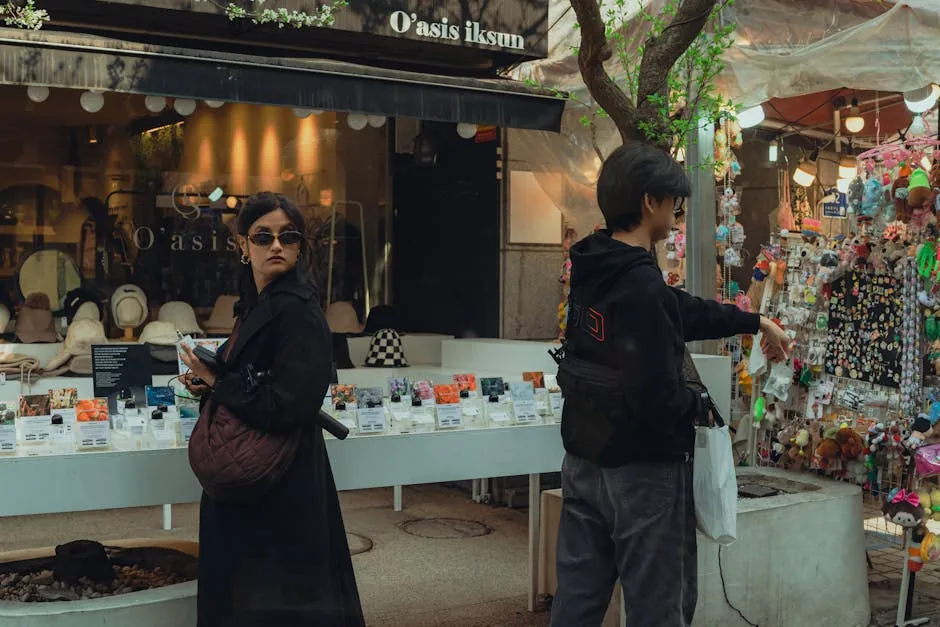
Featured A — Ader Error Flagship, Hongdae
Ader Error's Hongdae flagship is the room that explains why Korean streetwear travelled internationally in the second half of the 2010s. Founded in 2014, Ader Error is one of the small group of Korean brands that managed to build a global following from a domestic base — collaborations with Zara, Puma, and Maison Kitsuné have appeared in cities where most of the audience has never set foot in Seoul, and the Hongdae flagship is the room that anchors the brand's identity for the visitors who do. The space reads as a creative-direction showcase rather than a conventional retail floor. Fixtures rotate with the seasons; the lighting is calibrated to make the room itself feel like a campaign image; the staff dress in the current collection without making the visitor feel underdressed for browsing. The merchandise covers the brand's full range — the conceptual oversize knitwear that defined its early identity, the heritage-leaning outerwear that pulled the brand into mainstream Asian markets in the late 2010s, the accessories that travel home in carry-on. The patient I would steer toward Ader Error is the international visitor who has already encountered the brand through a London or Tokyo stockist and wants to see the home-base flagship, or the first-time visitor who wants a single Hongdae stop that explains what Korean streetwear has become in the past decade. The room is large enough to absorb a busy Saturday afternoon without feeling congested, and the staff are accustomed to international visitors browsing slowly. What makes Ader Error's flagship worth singling out from the wider Hongdae cluster is not novelty but identity stability. The brand has navigated the difficult transition from cult Korean label to global streetwear name without losing the creative-direction coherence that defined the early collections, and the flagship is the room that demonstrates that. Brands that grow internationally often diffuse their identity across multiple stockists and lose the editorial register that built the original audience; Ader Error has kept the editorial register in the room, which makes the Hongdae flagship a more honest representation of the brand than most of its global stockists. International visitors who have only seen the brand through department-store pop-ups or third-party retailers tend to leave the Hongdae room with a different and more accurate picture of what Ader Error actually does. The flagship is the room that closes the gap.
Featured B — ALAND Hongdae
ALAND is the Korean multi-brand select shop that has done more than any other single retailer to expose emerging domestic designers to international visitors. The Hongdae outpost is among the brand's most heavily trafficked locations, and the curation reflects that — the floors carry a rotating mix of Korean streetwear, womenswear, accessories, beauty, and lifestyle pieces, organised in a way that lets a visitor with no prior knowledge of the domestic industry build a coherent picture of it in forty-five minutes. The format is dense rather than precious. Fixtures are close together; the merchandise turns over quickly enough that two visits a season apart will produce noticeably different stock; the price ladder runs from accessible Korean basics to the kind of design-led pieces that get profiled in international magazines a season after they appear in the store. The cluster context matters here. Most international visitors who arrive in Hongdae looking for Korean fashion want a single room that lets them survey the domestic industry without committing to a specific brand identity; ALAND is that room. The patient I would steer toward ALAND is the first-time Korean-fashion visitor who wants breadth rather than depth, or the returning visitor who wants to track which new domestic labels have been picked up by the curation team this season. The store sees enough international foot traffic that the staff handle English orders comfortably, and the checkout flow accommodates international cards without the friction that some smaller Hongdae boutiques produce. The wider point ALAND makes about the Hongdae cluster is that the neighbourhood works best as a survey when you let a curated select shop do the editorial work for you. Walking the alleys is rewarding for the room-by-room variation, but visitors with limited time who want to come away with a clear picture of the current Korean designer landscape get more from forty-five minutes inside ALAND than from two hours of unstructured browsing. The select-shop format is not unique to Hongdae — Cheongdam has its own equivalents at a different price tier — but the Hongdae version is the one that captures the emerging end of the industry, which is the part of Korean fashion that international visitors are usually looking for when they make the trip across the Han River. Treat ALAND as the orientation room and the other four addresses on this list as the specialisation.
Featured C — Gentle Monster Hongdae
Gentle Monster's Hongdae flagship is the room that explains why Korean eyewear became a global design category in the second half of the 2010s. The brand is now one of Korea's most internationally visible exports, with flagships in Beijing, Shanghai, London, and New York, but the Hongdae room remains one of its most ambitious retail installations. The interior design changes with each major collection — recent installations have featured kinetic sculpture, large-scale architectural pieces, and immersive lighting that makes the room feel closer to a contemporary art gallery than a conventional eyewear retailer. The eyewear is the product; the room is the editorial statement. The format is intentionally slow. Visitors are encouraged to circulate, to spend time with the installation as much as with the merchandise, and the staff are trained to let the room do the first thirty minutes of work before initiating a conversation. The patient I would steer toward Gentle Monster's Hongdae flagship is the visitor who has only encountered the brand through a department-store stockist and wants to see the home-base creative direction, or the design-curious international visitor who wants a Hongdae stop that reads as much like a gallery as a retail floor. The eyewear itself sits at a price tier that is competitive with the comparable European houses — the lenses and frames are calibrated to a level that justifies the room around them — and the staff are comfortable with international visitors who treat the room as an installation first and a retail destination second. The cluster context worth flagging is that Gentle Monster's Hongdae installation has, more than any other single retail room in Seoul, set the template for how Korean design brands treat the offline flagship as a creative-direction surface. The pattern has since spread through Korean cosmetics retail, Korean coffee retail, and Korean accessory retail, and visitors who walk through several of these rooms in a single afternoon often end up returning to Gentle Monster as the reference point. The eyewear is the product; the wider influence is the room itself, and the Hongdae version is the one that international visitors should treat as the canonical version of the brand's retail philosophy. Verify the current installation through the brand's social channels before walking over — the room rotates frequently enough that two visits six months apart will read as different stores.
Featured D — Visual Aid, Hongdae
Visual Aid is the Hongdae multi-brand boutique that has built its reputation on balancing established Korean designers with emerging labels. The room is smaller than ALAND and more curated than a department-store concession — the format reads closer to a Tokyo Daikanyama select shop than to a Seoul mall outpost, with a tightly edited rotation that changes often enough to reward repeat visits. The merchandise covers a narrower range than ALAND's — the focus sits on contemporary apparel and accessories with a design-led register, rather than on the breadth of Korean lifestyle retail — but the curation depth is higher. Pieces that get picked up by Visual Aid often appear in the international design press a season later, which is one of the reasons the store has a loyal following among Korean fashion editors and stylists. The room is the kind of address that repays a visitor who already has a sense of what they want and wants a curator to confirm or refine the pick. The patient I would steer toward Visual Aid is the returning international visitor who has already covered ALAND and the flagships and wants a denser curation experience, or the design-school traveller who is in Seoul partly to scout the next wave of Korean independent labels. The staff are conversant in the brand catalogue and can talk through the editorial logic behind a season's rotation; the pricing sits in the middle tier, with most pieces in the range that would be comparable to a Berlin or Copenhagen independent designer boutique rather than a Tokyo or New York one. The wider point Visual Aid makes about the Hongdae cluster is that the neighbourhood has matured into a multi-layer retail ecosystem in which the survey room (ALAND) and the curated room (Visual Aid) sit alongside the flagships in a way that lets a visitor build a Hongdae afternoon at whatever depth they want. Earlier in the cluster's history the boutiques and the flagships were closer to a single tier; the past five years have produced a useful differentiation, and Visual Aid is one of the addresses that defined the curated end of that differentiation. International visitors who treat Hongdae as a single category usually leave with a less textured picture of the neighbourhood than visitors who walk through both the survey and curated formats in the same afternoon. Visual Aid is the room that turns a Hongdae stop into a layered survey rather than a single browsing pass.
Walking the cluster — a half-day route
If you want a single half-day route that captures the cluster's range, the version that has worked best on multiple visits is roughly this. Start at Hongik University Station Exit 9 around noon and walk north into the main Hongdae core. Ader Error's flagship is a short walk from the exit and is best visited at the start of an afternoon, when the room is still settling into the day's rhythm and the staff have time to talk through the current collection. From Ader Error, walk through the surrounding alleys toward Gentle Monster — the route passes several of the smaller Hongdae boutiques that did not make the source-stability cut for this guide but are worth a glance — and let the room there absorb thirty to forty minutes. The installation is the point; treat the eyewear as the souvenir. By mid-afternoon, walk south-east toward ALAND. The store is dense enough that a visitor coming straight from two flagship installations will read it as a useful counterweight — the survey-format breadth makes the flagships feel more specialised in retrospect than they did during the visit. If your afternoon has time left, Visual Aid sits a short walk from ALAND and is the natural fourth stop. MUSINSA Standard is the closer of the two remaining flagships and the most accessible price tier, which makes it a good closing stop for visitors who want to leave Hongdae with a tangible piece without committing to a higher-tier purchase. The remaining flagship — MUSINSA Standard — fits on a second visit rather than a single day for visitors who want to absorb each room properly. The cluster does not reward speed. It rewards walking pace, the willingness to let an alley pull you off-route, and the patience to treat a single afternoon as enough of an itinerary on its own.
Featured E — MUSINSA Standard Hongdae
MUSINSA Standard's Hongdae flagship is the offline expression of Korea's largest online fashion platform. MUSINSA itself functions as the dominant aggregator of Korean domestic fashion online — the platform's editorial reach is a meaningful part of how new Korean labels build awareness — and the offline Standard flagship in Hongdae reads as the brand's own house line rather than as a marketplace storefront. The format is intentionally accessible. The merchandise covers the basics tier of Korean contemporary fashion at a price point that sits below most of the other addresses on this list, the fixtures are organised for efficient browsing rather than for installation aesthetics, and the staff are accustomed to international visitors who want to leave with a tangible Korean-fashion piece without committing to a higher-tier flagship purchase. The Standard line is calibrated to give a first-time visitor a working introduction to the silhouette and fit conventions that Korean contemporary fashion has settled on in the past five years, which makes it a useful closing stop for an afternoon that started with the more design-led flagships. The patient I would steer toward MUSINSA Standard Hongdae is the international visitor who wants to leave Hongdae with a wearable piece at an accessible price point, or the first-time visitor who wants to understand what the Korean fashion mainstream looks like as a counterweight to the design-led upper tier. The store sees enough international foot traffic that the staff handle English orders comfortably, and the checkout flow is fast — useful at the end of an afternoon when fatigue has set in. The wider point MUSINSA Standard makes about the Hongdae cluster is that the neighbourhood now contains both the design-led flagships and the accessible mainstream within a short walking radius, which is a feature that Apgujeong and Cheongdam do not match. Cheongdam runs at a single high tier; Apgujeong runs at a contemporary-global tier; Hongdae runs at a five-layer ladder that includes the accessible mainstream, the curated select shops, the design-led flagships, the installation-as-retail flagships, and the emerging-label rotation. International visitors who treat Korean fashion as a single category usually leave Hongdae with a less textured picture than visitors who walk through several tiers of the ladder in the same afternoon. MUSINSA Standard is the room that closes the ladder at the accessible end.
Frequently asked questions
How does the Hongdae designer cluster compare to Cheongdam and Apgujeong for international visitors?
Cheongdam runs at the European luxury tier — Chanel, Hermès, the contemporary global houses at department-store-grade locations. Apgujeong's Rodeo Street runs at the contemporary-global tier with Korean entries at the upper end. Hongdae runs at the Korean independent designer tier and the streetwear flagship tier, which is the part of Korean fashion most international visitors are actually looking for when they search for Seoul designer shopping. The three districts are complementary rather than competitive; the cleanest itinerary covers Hongdae for the independent designer cluster and treats Cheongdam and Apgujeong as separate trips.
Is Hongdae safe for solo shopping and weekday afternoon visits?
Hongdae is one of Seoul's safer central neighbourhoods at almost any hour. The main core around Hongik University Station Exits 8 and 9 stays active until past midnight; the surrounding alleys are well-lit and well-policed through evening hours. Most independent designer rooms close earlier than the broader Hongdae nightlife — most of the five above stop trading between 21:00 and 22:00. Solo visitors are common and not noticed; the cluster's flagship-heavy character means single browsers are normal across the neighbourhood. Visitors with mobility considerations should be aware that some of the smaller boutiques in the surrounding alleys have step-up entries that the flagships do not.
How do I get from a Cheongdam or Apgujeong hotel to Hongdae?
From Apgujeong, Line 3 west to Express Bus Terminal, then Line 9 to Dangsan, then Line 2 to Hongik University Station — roughly thirty-five minutes in total. A taxi runs twenty-five to thirty minutes in light traffic and is the more comfortable option after a procedure day. From Gangnam Station, Line 2 direct, fourteen stops, about twenty-eight minutes. From Incheon Airport, the AREX express to Hongik University Station is roughly fifty minutes and is cheaper than the AREX to Seoul Station for visitors staying near Hongdae.
Are any of the five suitable for post-procedure recovery-day shopping?
Ader Error, ALAND, and MUSINSA Standard are the three most recovery-friendly. The rooms are well-ventilated, the lighting is calibrated below the levels that some smaller Korean boutiques run, and the staff are not pressing visitors to move quickly. Gentle Monster's installation lighting can be visually intense and may not suit visitors in the first forty-eight hours of an aesthetic recovery; Visual Aid's smaller footprint can feel close on a sensitive day. Verify any specific dietary or environmental requirements with your treating clinician before treating shopping as a recovery activity.
What does a typical purchase cost across the five rooms?
Ader Error and Gentle Monster run at the highest tier — KRW 280,000 to 750,000 for the headline pieces, with accessories running KRW 90,000 to 250,000. ALAND and Visual Aid cover a wider range — apparel from KRW 80,000 to 380,000 depending on the label and the season. MUSINSA Standard is the accessible tier, with most pieces KRW 35,000 to 120,000. None of the five charge a premium over comparable Tokyo or Hong Kong addresses for the equivalent piece, and several pieces are noticeably cheaper than the international stockist prices for the same brand.
Do these boutiques take international cards and process VAT refunds?
All five accept the major international cards without friction and most have Tax Free Korea stickers at the entrance. VAT refund eligibility starts at KRW 30,000 per purchase per store, which most of the five reach comfortably. The refund is processed at Incheon Airport's tax refund counters before departure; bring the receipts and the items as carry-on rather than checking them. Smaller Hongdae boutiques outside the five featured here are inconsistent on tax refund participation, so confirm at the register before committing to a higher-tier purchase.
Are reservations needed?
None of the five require reservations under normal conditions. Ader Error and Gentle Monster can be crowded on Saturday afternoons during fashion-week windows or limited-collection drops; weekday afternoons are the lower-density alternative. ALAND and MUSINSA Standard handle high foot traffic without requiring a queue. Visual Aid is small enough that one busy afternoon can produce a five-to-ten-minute browsing wait; visiting before 13:00 or after 18:00 produces the most comfortable browsing experience. International visitors without a Korean phone number can walk in to all five without an issue.
Is the cluster going to look the same in a year or two?
The five rooms above are the cluster's most source-stable addresses — flagships and select shops with multi-year track records and consistent editorial coverage in Visit Seoul, VisitKorea, and the international fashion press. Smaller Hongdae boutiques rotate frequently, particularly in the surrounding alleys, where independent designer storefronts cycle around twenty-five to thirty-five percent over a three-year window. If you are reading this guide more than eighteen months after publication, verify current operating hours and addresses via Visit Seoul and Naver Place before walking over — the cluster's spine is durable but individual flagships do occasionally relocate within the neighbourhood.