Editorial Picks
7 Photo Spots Defining Hongdae and Yeonnam-dong
A walking-pace tour through seven Hongdae and Yeonnam outdoor and architectural photo locations — read as a Seoul aesthetic and lifestyle picture, not a leaderboard.
The thing to understand about Hongdae as a photography neighbourhood is that the most interesting locations are not the ones that show up first in Instagram geotag results. The seven spots below are scattered across Yeonnam-dong, the main Hongdae core, and the alleys that fan out from Hongik University Station Exits 3, 8, and 9 — a walking quadrant that has, in the past decade, become one of the most photographed neighbourhoods in Seoul by sheer volume of frames per hour during daylight. If you are reading this from a Seoul hotel in Apgujeong or Cheongdam — the medical-tourism belt where most international visitors stay for derma and aesthetic work — Hongdae is roughly twenty-eight minutes east on Line 2 from Gangnam Station or a twenty-five-to-thirty-minute taxi from the Han River. That distance is part of the point. The visual register here is the counterpoint to Apgujeong's polish, and the locations reflect it: the linear forest park reads cooler than any Gangnam landscape would, the mural alleys are the closest Korean equivalent of a Bushwick or Shoreditch aesthetic, the architectural facades are kinder to handheld photography than the glass towers south of the Han, and the price of admission to all seven is the price of the subway ride to get there. None of the seven below should be read as a ranking. They are seven different ways of photographing a neighbourhood that has spent the past decade quietly producing the visual reference points that the rest of Korean Instagram is still catching up to. Bring a walking pace; bring a wide-and-fast lens; let the afternoon stretch. Authority anchor: Visit Seoul official tourism portal for transport orientation and VisitKorea Hongdae guide for current cherry blossom and seasonal event windows, which can shift the optimal photographing windows by two to three weeks depending on the year. A second framing point matters before the list begins. Korean outdoor photography is not a single register and never has been; the linear park spine that locals call Yeontral Park reads in one visual mode, the mural alleys read in a second, the architectural flagships read in a third, and the everyday street photography that defined Hongdae's identity in the early 2000s reads in a fourth. The seven spots below cover that range — a forest park, two mural concentrations, a public square, an architectural facade, a university gate, and an alleyway concentration — rather than treating Hongdae's photographic identity as a single style. All four registers are valid, and the cluster reads more rewardingly if you walk between two or three of them in a single afternoon than if you treat any one of them as a destination stop. The neighbourhood's appeal as a photography cluster also has a structural explanation. The Gyeongui Line Forest Park reactivation between 2015 and 2016 produced a 1.3-kilometre linear corridor that locals nicknamed Yeontral as a portmanteau of Yeonnam and Central Park, and the foot traffic the park pulled into formerly quieter alleys produced a wave of mural and street art installations that fed back into the photography ecosystem. The result is a cluster that feels organic rather than curated, with the kind of corner-by-corner variation that makes a walking tour worthwhile.
Featured A — Gyeongui Line Forest Park (Yeontral Park), Yeonnam-dong
The Gyeongui Line Forest Park is the linear corridor that runs along the former rail bed through Yeonnam-dong, and locals coined the Yeontral Park nickname as a portmanteau of Yeonnam and Central Park. The main 1.3-kilometre stretch starts a short walk from Hongik University Station Exit 3 and runs north through the neighbourhood at a width that lets two adults walk side by side comfortably while still feeling like a corridor rather than an open plaza. The mid-rise tree canopy and the diagonal path geometry produce the single most photographed view in the neighbourhood — the tree-lined corridor looking south, especially at golden hour and during the late-March-to-early-April cherry blossom window. The composition is forgiving. A standard 35mm or 50mm equivalent focal length works without effort, the path itself produces clean leading lines that pull the eye into the frame, and the mid-rise buildings flanking the corridor stay below the treeline in a way that keeps the visual register quieter than a downtown Seoul park would. On a weekday morning the path is genuinely quiet; weekends pull in mat-and-beer gatherings of twenties and thirties Seoul residents that change the visual character of the corridor in ways that some photographers will read as the picture itself and some will want to avoid. The patient I would steer toward Yeontral Park first is the international visitor who wants a single Hongdae photo location that does not require navigating a crowded alley grid, or the post-procedure traveller looking for a low-stimulation walking environment that still produces a frame worth carrying home. Visit before 10:00 on a weekday for the cleanest version of the corridor; visit at 17:30 to 18:30 in late March or early April for the cherry blossom window. The cluster context matters here. Yeontral Park is the editorial spine of the Hongdae photography cluster — the location that pulls the foot traffic that produces the mural alleys, the cafe density, and the wider Yeonnam-dong photo ecosystem. International visitors who treat the park as a single stop and walk the surrounding alleys for thirty to forty minutes after will leave with a more textured picture of the cluster than visitors who treat any single location as the destination. The park itself is free and accessible; the surrounding alleys are the part of the cluster that rewards a slower walking pace.
Featured B — Yeonnam-dong Mural Alleyway
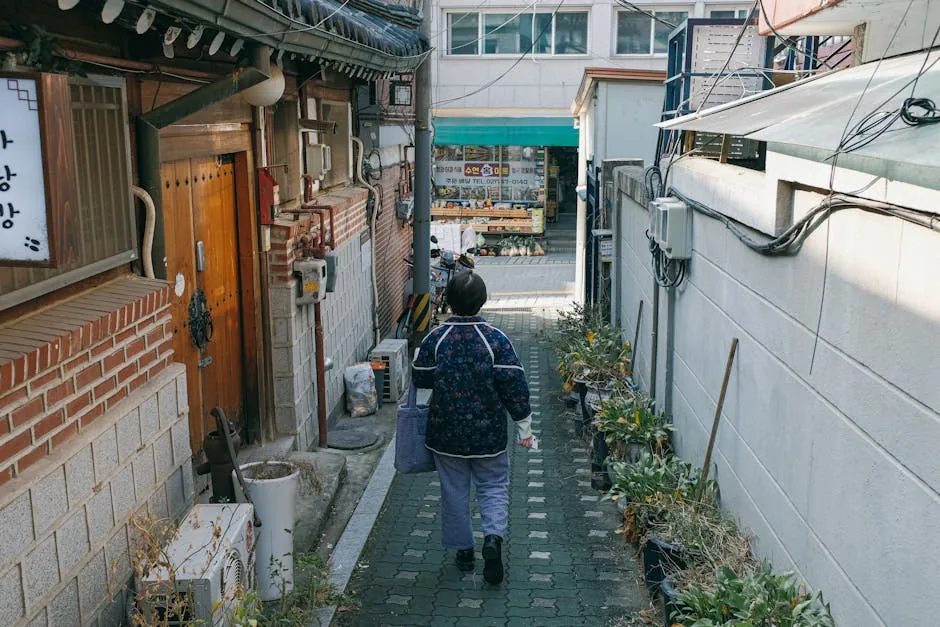
The Yeonnam-dong mural alleyway concentration sits north of the linear park, in the alley grid that fans out from the park's mid-section. The murals rotate frequently — a piece that was on a wall in March may have been overpainted by October, which produces a photography environment that rewards repeat visits more than a single survey would. The aesthetic sits somewhere between Bushwick and Lisbon's Bairro Alto: the murals are mostly figurative rather than abstract, the colour palette skews warmer than the cooler register of the park itself, and the alleys are narrow enough that a 24mm or 28mm equivalent focal length produces tighter frames than a wider lens would. The cluster context matters here. Yeonnam-dong's mural alley concentration is the densest in Seoul outside Hongdae's main core, and the editorial register is meaningfully different. The main-core murals lean toward graffiti and street-art convention; the Yeonnam-dong concentration leans toward illustration and figurative work, which produces frames that read closer to a designed environment than to a raw urban wall. The patient I would steer toward the Yeonnam mural alleyway is the photographer who wants the warmest part of the Hongdae visual cluster, or the international visitor who has already covered the linear park and wants a denser visual environment in the same neighbourhood. The alleys are quiet on weekday mornings and crowded on weekend afternoons; visiting between 10:30 and 13:00 on a weekday produces the cleanest version of the concentration. What gives the Yeonnam mural alleys their anchor status in the Hongdae photography cluster is not any single piece but the cumulative geography. The wider point is that the alleys reward a slower walking pace and a willingness to be pulled off-route — the most interesting frames usually come from corners that do not appear in any geotag because the wall has been overpainted three times since the last guidebook update. Trippose's alleyway tour route and several of the smaller Lemon8 photo guides cover the main spine of the concentration, but the editorial argument for visiting is the corner-by-corner variation rather than the headline pieces. Visitors who treat the alleys as a single survey usually leave with a less textured picture than visitors who walk through the same corner twice at thirty-minute intervals.
Featured C — Hongdae Playground
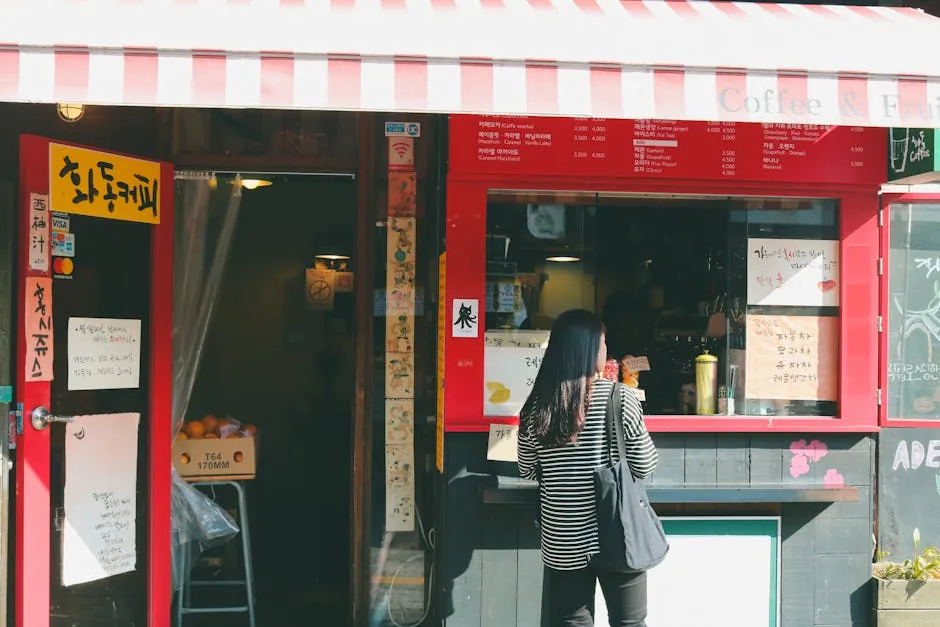
Hongdae Playground is the public square at the centre of the main Hongdae core — a small open plaza that has served as the neighbourhood's social anchor for more than two decades, and is the site of the Hongdae Free Market on weekends between March and November. The square itself is unremarkable as architecture, which is part of the point — the photography opportunity is the activity on the square rather than the geometry of it. The weekend Free Market is the cleanest reason to visit. Local artists set up stalls of original prints, ceramics, accessories, and small-format installations; the lighting is full sun on the square through most of the afternoon, and the human density produces the kind of street photography environment that Hongdae was originally photographed for in the late 1990s. Weekday afternoons are quieter and produce a different visual register — the busking culture that defined Hongdae's identity through the 2000s and 2010s still surfaces in the evening hours, particularly on Friday and Saturday between 19:00 and 23:00. The cluster context matters here. Hongdae Playground is one of the few spots in the neighbourhood where the photography opportunity is the people rather than the environment, which is a useful counterweight to the architecture-and-landscape register that Yeontral Park and the mural alleys produce. The patient I would steer toward the Playground is the photographer who wants to add a human-density frame to a Hongdae set otherwise dominated by landscape and architecture, or the international visitor who wants to see the original Hongdae street-photography environment that produced the neighbourhood's reputation in the first place. Visit during the Free Market window — March-to-November weekends — for the densest version of the square. Sunday afternoons between 14:00 and 17:00 are the peak. The wider point Hongdae Playground makes about the cluster is that the neighbourhood works best when the photographer treats the human activity as a layer rather than as an obstacle. Visitors who arrive looking for empty frames sometimes leave disappointed; visitors who arrive looking for the people who use the square usually leave with the most interesting frames of their Hongdae afternoon.
Featured D — Hongdae Mural Street
Hongdae Mural Street is the main-core mural concentration that sits in the alleys near Hongik University's main gate, and is the closest Korean equivalent of a Bushwick aesthetic. The murals lean toward graffiti and street art rather than the figurative illustration register that defines Yeonnam-dong's concentration, and the colour palette is louder, the pieces are larger, and the walls are repainted more frequently. The cluster sits a five-to-ten-minute walk south-east of Hongik University Station Exit 9, and the alleys themselves are narrower than the Yeonnam-dong concentration, which produces a more compressed visual environment. The aesthetic is the product. A 24mm or 28mm equivalent focal length produces frames that read tight and busy in a way that suits the graffiti register; longer focal lengths flatten the walls and lose the geometry of the alley itself. Late afternoon between 15:30 and 17:30 is the cleanest light window — the alleys catch a soft side-lit register that holds the mural colours without producing harsh shadows. The patient I would steer toward Hongdae Mural Street is the photographer who wants the louder counterweight to the cooler Yeonnam-dong concentration, or the international visitor who has only twenty minutes in the main Hongdae core and wants a single dense visual environment to anchor the visit. The Hongdae Mural Street concentration shifts faster than the Yeonnam-dong one. Pieces that headline a guidebook can be overpainted within a season, and the editorial argument for visiting is the cumulative geography rather than any single piece. Visitors who walk the concentration without a target and let the corners do the work tend to leave with the more interesting frames.
Walking the cluster — a half-day route
If you want a single half-day route that captures the cluster's range, the version that has worked best on multiple visits is roughly this. Start at Hongik University Station Exit 3 around 10:00 and walk north into Yeonnam-dong along the linear-park spine. Take a slow twelve-to-fifteen-minute walk through the park; on a weekday morning the path is genuinely quiet, and the cherry trees and mid-rise tree canopy make the walk one of the better introductions to the neighbourhood's softer visual side. By 10:30 the park has done its editorial work and the Yeonnam-dong mural alley concentration sits a short detour north-east of the spine. A thirty-to-forty-minute wander through the alleys produces a denser version of the Hongdae visual register than a longer pass through any single location would. From the mural alleys, walk south-east through the Yeonnam-dong cafe spine — the area between the park's mid-section and Hongik University Station Exit 9 is a useful cool-down corridor that lets the afternoon settle. By around 13:00 you have crossed roughly half of Hongdae's most photographed territory and visited three of the cluster's seven anchor locations. The afternoon expansion runs south from Exit 9 into the main Hongdae core. KT&G Sangsangmadang sits a short walk from the exit; the Hongik University main gate area is the natural second main-core stop; Hongdae Mural Street is the dense main-core mural counterweight to the Yeonnam-dong concentration; and Hongdae Playground sits a short walk from the gate. A second walking pass through the main-core alleys between 15:30 and 17:30 produces the cleanest light window for the Hongdae Mural Street concentration. The remaining location — KT&G Sangsangmadang exterior — fits naturally into the main-core expansion. The cluster does not reward speed. It rewards walking pace, the willingness to let an alley pull you off-route, and the patience to treat a single afternoon as enough of an itinerary on its own.
Featured E — KT&G Sangsangmadang exterior, Seogyo-dong
The KT&G Sangsangmadang building in Seogyo-dong is the curved silver-clad architectural facade that opened in 2007 as part of the cultural complex operated by KT&G — the Korean tobacco and ginseng company's corporate cultural arm. The building's eleven-story exterior is one of the most photographed pieces of architecture in Hongdae, and the facade design has aged well enough that fifteen years after opening it still reads as a contemporary architectural moment rather than a dated installation. The architectural register is the product. A 28mm or 35mm equivalent focal length produces clean frames of the lower three stories from the opposite side of the street; a 50mm captures the curve as a section without producing distortion at the edges. The exterior holds light through most of the day, but the late-afternoon window between 16:00 and 17:30 produces the warmest version of the silver cladding. The patient I would steer toward Sangsangmadang's exterior is the architecture-curious international visitor who wants a Hongdae stop that reads more like a Bilbao or a Tokyo Aoyama moment than a graffiti alley, or the photographer who wants a single piece of architectural geometry to anchor a Hongdae set otherwise dominated by softer landscape and mural frames. The interior is also worth visiting — most exhibitions are free admission, and the cultural complex inside contains a cinema, a live performance hall, a gallery, and a cafe lounge that produces a useful indoor cool-down environment on a long Hongdae afternoon. The wider point Sangsangmadang's exterior makes about the cluster is that Hongdae's architectural register is meaningfully different from the rest of Seoul's. Gangnam runs at the glass-tower contemporary tier; the Cheongdam corridor runs at the European-luxury-house tier; Hongdae's architectural identity sits in the mid-rise contemporary-Korean tier, and Sangsangmadang is the canonical piece in that register. Visitors who treat Hongdae as a single visual category usually leave with a less textured picture of the neighbourhood than visitors who walk through the architectural register, the linear park, and the mural alleys in the same afternoon. Sangsangmadang is the room that closes the architectural side of the cluster.
Featured F — Hongik University Main Gate area
The Hongik University main gate sits at the edge of the main Hongdae core and is the symbolic entry point to the neighbourhood. The gate itself is a modest piece of architecture — concrete and steel, no monumental signage — but the surrounding plaza is busking-heavy in the evening hours, and the area produces a distinctive visual register that anchors several of Hongdae's wider editorial conventions. The cluster context matters here. The main gate area is one of the few Hongdae locations where the photography opportunity is the cultural identity of the neighbourhood — the busking, the design-school graduate density, the spillover from the Hongik University fine arts programme — rather than the architecture itself. A 35mm or 50mm equivalent focal length works for the human-density frames; a 24mm pulls in the broader plaza geometry but tends to flatten the visual environment in a way that loses the cultural register. The patient I would steer toward the main gate area is the photographer who wants to capture the cultural identity of Hongdae rather than the surface aesthetic of it, or the international visitor who wants to understand why the neighbourhood became the historical engine room of Korean indie music, fashion, and design rather than just the Instagram destination it is sometimes described as. Visit between 19:00 and 21:00 on a Friday or Saturday for the densest busking environment. The main gate area photographs differently in daylight and in the evening hours. The daylight register is closer to a conventional university gate; the evening register pulls in the busking culture and the spillover crowds that produce the cluster's most editorially interesting frames. Visitors who return at 19:30 on a weekend evening usually leave with the frame that anchors the set.
Featured G — Yeonnam-dong Cafe Spine alley grid
The Yeonnam-dong cafe spine alley grid is the corridor of small-format cafes, independent shops, and street-level storefronts that runs between the linear park's mid-section and Hongik University Station Exit 3. The grid itself is not a single photographable location — it is the cumulative geography that produces the cluster's everyday visual register, the corner-by-corner mid-rise neighbourhood texture that defines what Hongdae actually looks like to the people who live there rather than to the tourists who pass through. The aesthetic is the product. A 35mm or 50mm equivalent focal length is the most forgiving option; the alleys are narrow enough that a wider lens often produces frames that read busier than the on-the-ground experience, and longer focal lengths lose the sense of the alley as a corridor. The light register holds through most of the day, but the late-morning window between 09:30 and 11:30 produces the cleanest version of the grid — the cafes are opening, the foot traffic is still light, and the side-lit alleys hold the cooler Yeonnam-dong colour palette without producing harsh shadows. The patient I would steer toward the Yeonnam-dong cafe spine is the photographer who wants the everyday version of the neighbourhood rather than the headline-spot version, or the international visitor who has already covered the linear park, the mural alleys, and the main-core architectural stops, and wants to spend a final hour in the corridor that produces the cluster's quieter editorial register. Bring a wide-and-fast lens. Let the corners do the work. The wider point the cafe spine grid makes about the Hongdae photography cluster is that the most interesting frames usually come from the locations that do not appear in any geotag because they are the everyday texture of the neighbourhood rather than the headline destinations. Visitors who structure a Hongdae photography itinerary around the seven anchor locations on this list and treat the cafe spine grid as the cool-down corridor between them usually leave with the most textured set of any single Seoul day. The cluster does not reward photographers who hunt; it rewards photographers who walk.
Frequently asked questions
How does the Hongdae photo cluster compare to Bukchon or Ikseon-dong for international visitors?
Bukchon runs at the traditional-hanok visual register — wooden architecture, sloped roofs, narrow alleys with a heritage skin. Ikseon-dong runs at the renovated-hanok lifestyle register — same building stock as Bukchon but converted into cafes and boutiques. Hongdae runs at the contemporary-Korean mid-rise register with murals, a linear park, and architectural flagships, which is the closest Korean equivalent of a contemporary European or American creative neighbourhood. The three clusters are complementary rather than competitive; the cleanest itinerary covers Hongdae for the contemporary photography register and treats Bukchon and Ikseon-dong as separate trips.
Is Hongdae safe for solo photography and evening walks?
Hongdae is one of Seoul's safer central neighbourhoods at almost any hour. The main core around Hongik University Station Exits 8 and 9 stays active until past midnight; Yeonnam-dong is quieter but well-lit and well-policed through evening hours. Solo photographers are common across the cluster and are not noticed by foot traffic. The linear park has lighting along the full length and remains comfortable for solo evening walks; the mural alleys can feel narrower after 21:00 but remain visitor-friendly. Visitors with sensitive lens equipment should be aware that some of the alley grid sections see drone activity that produces inconsistent ambient light.
How do I get from a Cheongdam or Apgujeong hotel to Hongdae?
From Apgujeong, Line 3 west to Express Bus Terminal, then Line 9 to Dangsan, then Line 2 to Hongik University Station — roughly thirty-five minutes in total. A taxi runs twenty-five to thirty minutes in light traffic. From Gangnam Station, Line 2 direct, fourteen stops, about twenty-eight minutes. From Incheon Airport, the AREX express to Hongik University Station is roughly fifty minutes and is cheaper than the AREX to Seoul Station for visitors staying near Hongdae. Exit 3 produces the cleanest start for Yeonnam-dong; Exit 9 produces the cleanest start for the main-core mural concentration.
Are any of the seven suitable for post-procedure recovery-day photography?
Yeontral Park and the Yeonnam-dong cafe spine grid are the two most recovery-friendly. Both are low-stimulation walking environments with a gentle gradient, the linear park has shaded sections that hold mid-day light without producing harsh exposure, and the cafe spine grid is quiet enough in the morning hours to be comfortable on a sensitive day. Hongdae Playground and the Hongdae Mural Street can feel visually intense in peak hours; Sangsangmadang's interior provides a useful indoor cool-down option for visitors who need to step out of direct sun. Verify any specific environmental requirements with your treating clinician.
What is the best time of year to visit for cherry blossom photography?
The Yeontral Park cherry blossom window typically runs from late March to early April, with peak bloom landing inside a ten-to-fourteen-day window each year. The exact timing shifts by two to three weeks depending on the spring temperatures, and the cleanest information comes from the Korea Meteorological Administration's spring forecast each February. Visiting in the second week of April produces the post-peak version with petal-drop frames that some photographers prefer to the peak bloom itself. Visit Seoul publishes a yearly cherry blossom guide that covers the major Seoul corridors including Yeontral.
What lens setup works best across the seven spots?
A two-lens setup covers the cluster comfortably. A 24mm or 28mm equivalent handles the mural alleys, the linear park corridor, and the architectural facades; a 35mm or 50mm equivalent handles the cafe spine grid, the public square, and the cultural-density frames around the university main gate. A single 28mm or 35mm prime handles roughly eighty percent of the cluster on its own and is the lightest option for a recovery-day walking pace. Telephoto lenses past 85mm are useful for the architectural geometry of Sangsangmadang from the opposite side of the street but otherwise tend to flatten the cluster's visual register.
Are drone shots permitted in Hongdae?
Recreational drone flight is restricted across most of central Seoul, including the Hongdae quadrant, under Korean civil aviation regulations. Yeontral Park itself sits inside a no-fly corridor, and most of the alley grid is below the legal minimum flight altitude. Visitors who want aerial frames of the cluster should consult the Korean Ministry of Land, Infrastructure and Transport's drone flight permit process before travelling; most international visitors find handheld photography sufficient for the cluster's editorial register and skip the drone option entirely.
Is the cluster going to look the same in a year or two?
The seven spots above are the cluster's most source-stable locations — anchors with multi-year track records and consistent editorial coverage in Visit Seoul, VisitKorea, the Seoul Metropolitan Government, and the international travel press. The linear park and the architectural facades will look largely the same in two years; the mural concentrations rotate frequently, with individual pieces being repainted on roughly a six-to-twelve-month cycle. If you are reading this guide more than eighteen months after publication, verify current cherry blossom and seasonal event windows via Visit Seoul and the Korea Meteorological Administration before travelling — the cluster's spine is durable but the seasonal timing windows do shift year to year.