Treatment Guide
Ultherapy for the 40s Face — Seoul's Moderate-Laxity Protocol Honestly Explained
A Taiwanese first-person walkthrough of how Seoul's four clinic clusters approach Ultherapy for patients in their forties, when the SMAS-depth protocol earns its keep, and how to read the consultation quote without getting upsold.
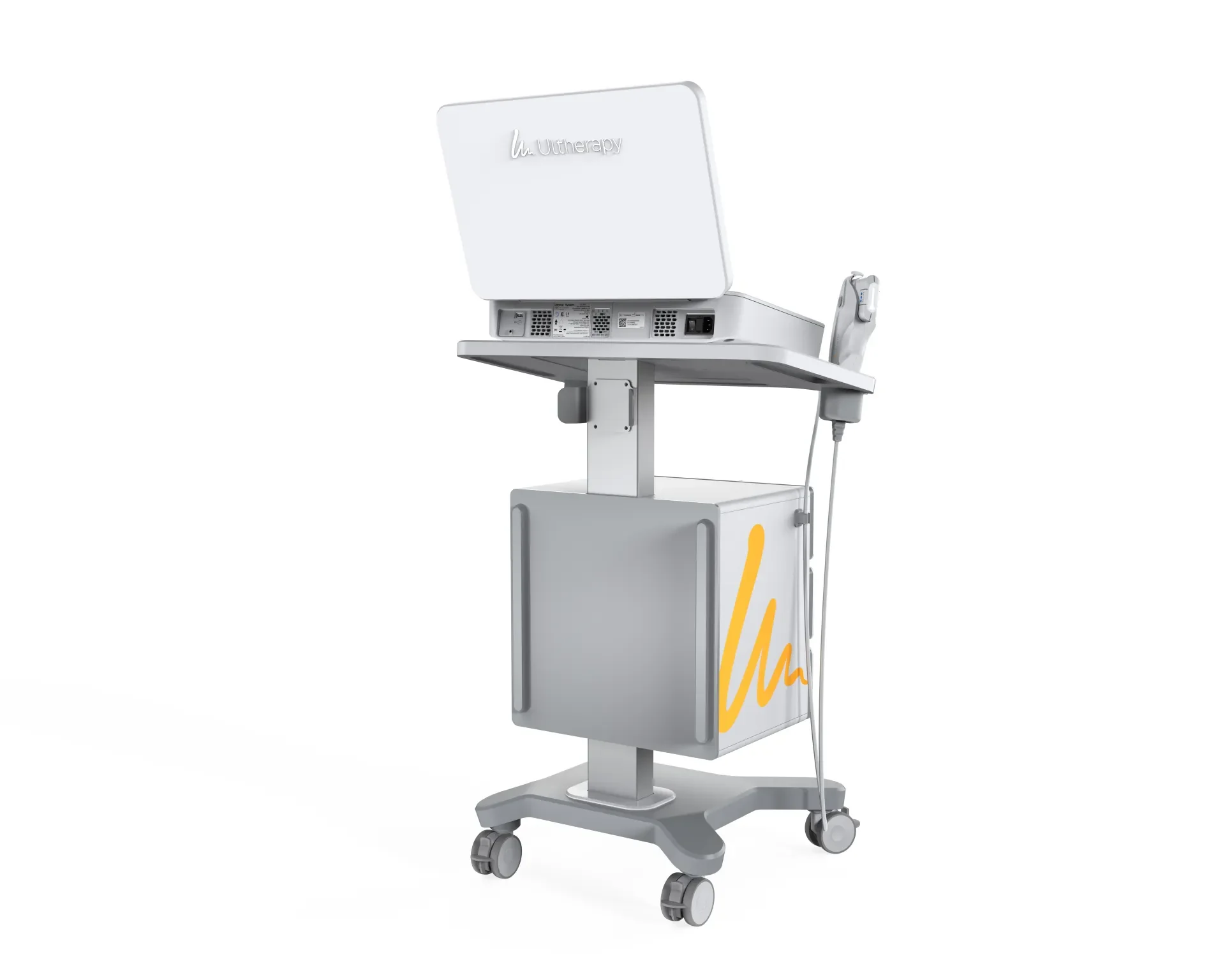
I started tracking Ultherapy seriously in my late thirties, when my 表姊 in Taipei came back from her second Seoul trip with a face that did not look operated on but did look measurably more lifted than the one I had photographed at her wedding three years earlier. She was forty-two at the time. By the time I went myself for my first treatment I was thirty-eight, and the conversation the Korean physician walked me through was not about prevention — it was about a specific clinical window the Korean aesthetic field calls 'moderate laxity,' the window where the SMAS layer has begun to descend but has not yet pulled the lower face into the structural folds that surgical lifting is designed to address. That window is, in the data Merz Aesthetics publishes and in the four-trip experience I have logged, almost exactly the 40s decade for most Asian faces. This page is the editorial walkthrough of how the four Seoul clusters approach Ultherapy for the 40s patient, what shot counts and zone breakdowns actually deliver the lift the brochures promise, and how to read a consultation quote without getting upsold into a generation or zone count you do not need. Authority anchor throughout: the Merz Aesthetics clinical evidence library is the only definitive source for indication parameters and shot-count guidance.
Why the 40s is the clinical sweet spot for SMAS-depth ultrasound
The clinical case for Ultherapy in the 40s is a structural argument about the SMAS (superficial musculo-aponeurotic system) layer at 4.5 mm depth, which is the layer Ultherapy targets and which, in most Asian faces, begins meaningful descent somewhere between thirty-eight and forty-four. In the 30s, the SMAS is generally still well-anchored and the lift Ultherapy delivers is preventive — measurable on photography but rarely visible to the patient herself. In the 50s and beyond, descent has often progressed to the point where deep folds, jowl drape, and platysma banding require surgical correction; Ultherapy at that stage can still deliver lift, but the gap between what the patient hopes for and what energy-based lifting can structurally deliver widens. The 40s is the window where the SMAS has descended enough that the lift is visible — patients see the change at the mirror, and the partner who has not seen the patient for six weeks notices something different without being able to name what. Merz Aesthetics' clinical investment has been concentrated on this window for almost a decade, and the Korean aesthetic field has built protocol shot counts, zone breakdowns, and combination treatment offerings specifically around the 40s patient.
Moderate laxity is not a marketing phrase — it is a physician finding
When a reputable Seoul physician calls a 40s patient 'moderate laxity,' she is making a specific clinical finding about how far the SMAS layer has descended, how the lower-third folds have developed, and how the jawline contour has softened from the more defined contour of the 30s face. Patients who hear 'moderate laxity' should expect to see it documented in the consultation note alongside zone-by-zone descent estimates — the better Cheongdam and Apgujeong consultations will draw on a printed face diagram or a tablet annotation tool. Patients who hear 'moderate laxity' without any documentation of the underlying assessment are reading a sales script, not a clinical finding. The verification: ask the physician to point out, on your own consultation photograph or in the mirror, the three zones where she sees the descent that warrants the protocol she is recommending. A good physician will do this without prompting; a hedging consultation will pivot to brochure language. This single question separates the editorial-grade consult from the upsell.
Cheongdam — the boutique 40s consultation, shot count and zone discipline
Cheongdam practices treating the 40s patient run a consultation that is, in my four-trip experience, the most disciplined in Seoul on shot count and zone breakdown. The typical Cheongdam 40s face-and-neck Ultherapy PRIME protocol runs 600 to 800 shots, distributed across the upper face (40 to 60 shots), midface and cheekbone (180 to 240), jawline (160 to 220), submental (100 to 140), and neck (120 to 160). The numbers are not arbitrary — they correspond to the SMAS coverage that Merz Aesthetics' clinical evidence library validates for the moderate-laxity indication. Cheongdam pricing for this protocol sits in the KRW 2,800,000 to 4,500,000 band, with PRIME as the default platform. The Cheongdam consultation differs from less rigorous practices in that the shot count is broken down in writing before the deposit, the zones are annotated on a face diagram, and any deviation from the protocol — adding décolleté, layering with a midface filler, sequencing with a separate skin-quality treatment — is documented as a separate line item rather than bundled into a 'premium upgrade' phrasing. The 40s patient who pays the Cheongdam premium is paying for this discipline more than for the address. The case for the cluster, for a Taiwanese 40s patient flying in for a single trip, is that the documentation and the multilingual coordinator infrastructure remove the friction that less rigorous consultations introduce.
What 600 to 800 shots actually means in 40s-face anatomy
The shot count is not a vanity metric — it is a coverage metric. The SMAS layer at 4.5 mm depth has to be addressed across the full descent zone if the lift is going to manifest as a visible structural change rather than as scattered tightening points. In 40s anatomy, the descent zones are broader than in 30s prevention protocols (where 300 to 400 shots is often adequate) and narrower than in late-50s correction attempts (where 1,000-plus shots are sometimes quoted to compensate for descent that energy-based lifting cannot fully reverse). The 600 to 800 range is the protocol coverage the Korean aesthetic field has converged on for moderate laxity, and it is what reputable Cheongdam, Apgujeong, and Gangnam Station axis practices will quote without prompting. A 40s consultation that quotes 300 shots is likely a maintenance protocol mislabelled; a 40s consultation that quotes 1,200 shots without zone justification is likely an upsell. Ask for the zone breakdown in writing.
Apgujeong — the broader 40s consultation, where combination treatment enters the conversation
Apgujeong practices treating the 40s patient run a broader consultation than Cheongdam, with combination treatment offerings entering the conversation earlier. The typical Apgujeong 40s face-and-neck Ultherapy PRIME protocol sits in the same 600 to 800 shot band and the KRW 2,200,000 to 3,500,000 pricing range, but the consultation is more likely to layer the protocol with a complementary modality — a midface volumiser, a polynucleotide skin-quality treatment, a sequential thread protocol — rather than treating Ultherapy as a standalone. The Apgujeong case for the 40s patient is that the cluster's broader treatment menu means a consultation can address the descent indication, the skin-quality indication, and the volumetric loss indication on the same trip. The friction point is that the broader menu also widens the surface for upsell — a consultation that begins with a 40s Ultherapy enquiry can drift toward a KRW 6,000,000 combination quote that bundles three modalities the patient did not arrive intending to discuss. Read every line item in writing before the deposit; the better Apgujeong practices will price the modalities transparently and let the patient decline the additions without friction. Apgujeong sits one cluster behind Cheongdam on PRIME penetration; verify generation on the Merz Aesthetics provider locator before assuming the quote represents the current platform.
Gangnam Station axis — the international-patient 40s consultation
The Gangnam Station axis — Sinsa, Sinnonhyeon, Gangnam Station itself, the Line 2 and Line 9 corridor — is where the most experienced international-patient infrastructure for the 40s Ultherapy consultation sits in Seoul. The larger international-patient practices in this cluster have built Mandarin-language coordinator teams, WhatsApp aftercare protocols, and printed consultation note templates specifically for the 40s patient flying in from Taipei, Hong Kong, or Tokyo for a three-to-five day trip. The shot count discipline is comparable to Cheongdam at the better international-patient practices; pricing sits in the KRW 1,800,000 to 3,500,000 band for the equivalent PRIME face-and-neck protocol, roughly 15 to 25 percent below Cheongdam for protocols of equivalent quality. The friction point is variability — the larger international-patient practices are excellent, but the mid-tier and smaller practices on the Gangnam Station axis have more mixed PRIME penetration. The 40s patient flying in from Taiwan should weight the international-patient infrastructure heavily and verify PRIME generation and shot count breakdown in writing. The cluster's transit access — KTX to Gangnam Station in 25 minutes from Incheon Airport — is the operational advantage that makes the 40s trip from TPE realistic.
Mandarin coordinator infrastructure matters more than people admit
The Mandarin coordinator is not a luxury — for the 40s patient flying in from Taipei, she is the single most important variable separating a clean consultation from a friction-laden one. The post-PRIME treatment window includes a recovery conversation about pinkness, swelling, the rare bruise pattern, and the seven-to-fourteen-day timeline for early visible change; that conversation needs to happen in the patient's native language, with the documentation also in the native language, and with a WhatsApp or LINE follow-up channel that does not require translation friction. The Gangnam Station axis practices that have built this infrastructure properly are, in my experience, the best operational fit for the 40s Taiwanese trip patient. The Cheongdam premium buys you boutique consultation discipline; the Gangnam Station international-patient practice buys you operational reliability across the trip.
Myeongdong — the value 40s consultation with extra verification required
Myeongdong is where the 40s patient can find genuinely competitive Ultherapy PRIME pricing — KRW 1,500,000 to 2,800,000 for the equivalent face-and-neck protocol — and where the verification protocol matters more than in the other three clusters. The reputable Myeongdong international-patient practices that have invested in PRIME and built multilingual coordinator infrastructure are good operational fits for the 40s patient on a tighter budget; the value posture in the cluster is real and not, on its own, a quality concern. The friction point is that Myeongdong's tourist-belt logistics mean some practices run original Ultherapy as the default while quoting 'Ultherapy' generically, some quote shot counts below the protocol coverage the 40s indication actually requires, and some bundle the consultation into the price without giving the patient the documentation a Cheongdam or Apgujeong consultation would provide. The 40s patient who picks Myeongdong should ask all four verification questions in writing (Merz Aesthetics provider locator listing, PRIME generation confirmed, shot count by zone broken down, physician-performed delivery per Korean medical law) and should expect the better Myeongdong practices to answer all four cleanly without consultation friction. If the answers hedge, the deposit should not flow.
The 40s patient on a tight budget — when Myeongdong is the right call
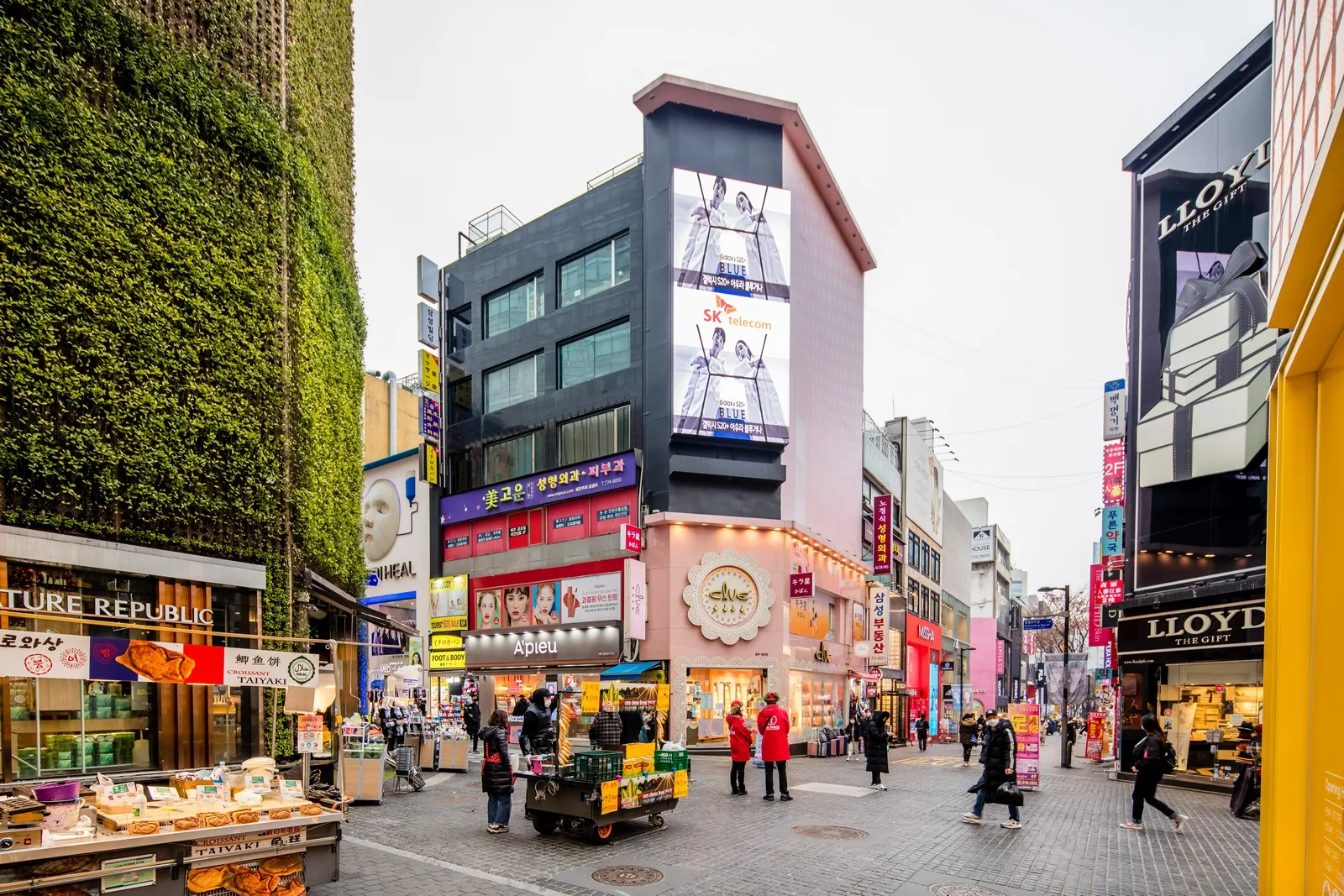
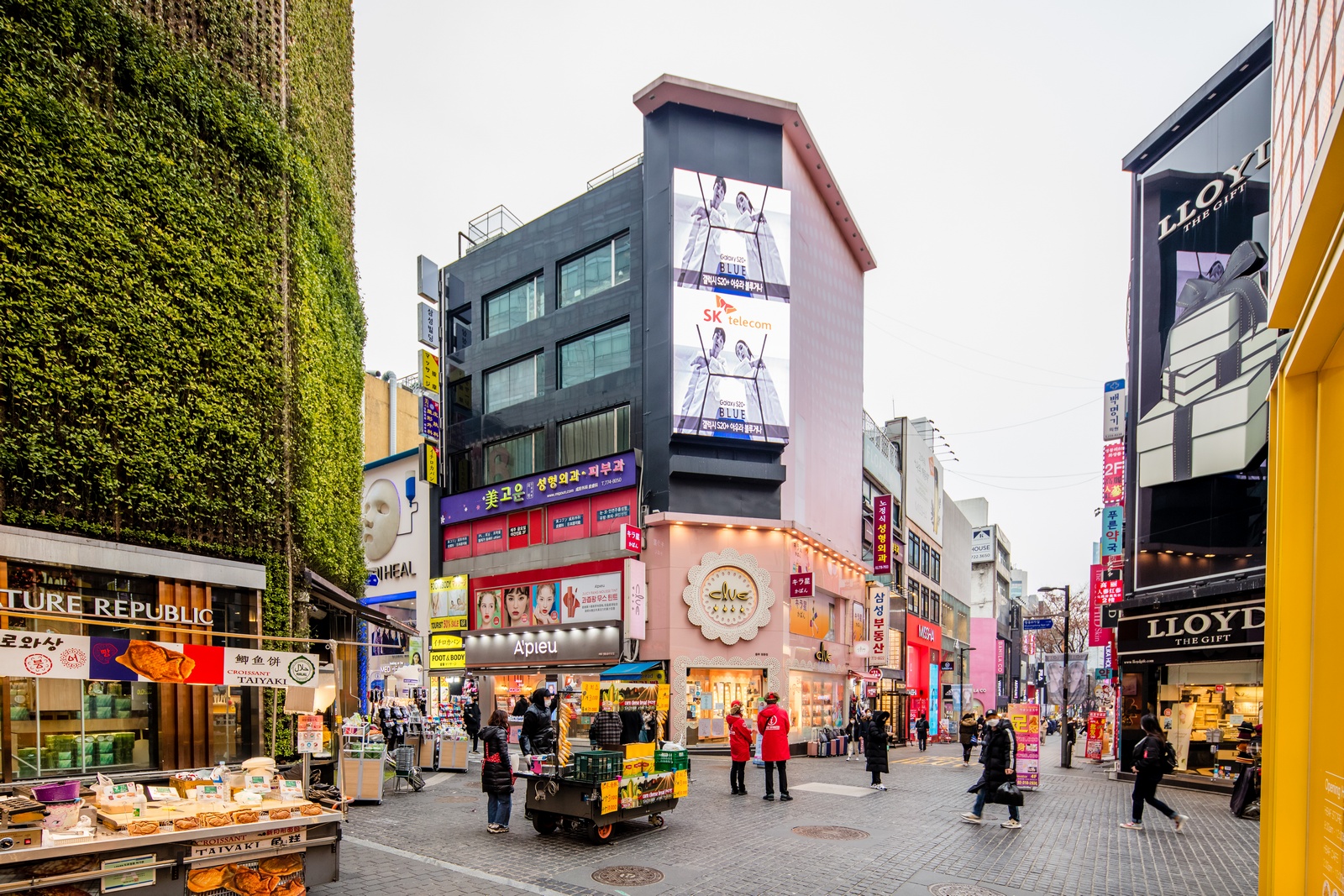
There is a 40s patient profile for whom Myeongdong is the editorially correct cluster: the maintenance patient who has already had a satisfying Ultherapy course in her late thirties or early forties, is returning for a refresh in the six-to-eighteen-month window, knows what the protocol involves, and is anchoring the trip on cost discipline rather than the boutique consultation premium. For her, the Myeongdong international-patient practice that runs PRIME with a verifiable shot count and a Mandarin coordinator is exactly the right operational fit, and the savings against Cheongdam are meaningful. The 40s patient she should not be confused with is the first-time Ultherapy patient who is anchoring on price and may not yet know to ask about generation, shot count, or platform authentication. For the first-time 40s patient, the Cheongdam or Gangnam Station premium buys reliability that compounds across the trip.
What 40s Ultherapy actually feels like — the personal four-trip account
Honest first-person account from a 40s patient's perspective: Ultherapy PRIME at the SMAS-depth protocol is not painless, but it is meaningfully more tolerable than the older generation, with discomfort concentrated in the jawline and submental zones where the bone is closest and the energy delivery is densest. The face protocol runs roughly 50 to 70 minutes on PRIME (the older generation was 75 to 90); the neck adds 15 to 20 minutes; décolleté adds another 15. The post-treatment window is mild — pinkness for an hour or two, occasional faint swelling along the jawline for 24 to 48 hours, and the rare small bruise where the energy crossed a vessel. The lift develops over three to six months as new collagen organises; the 40s patient should expect first photographable change at six to eight weeks and full result at twelve to twenty-four weeks. The result is not a dramatic transformation — it is a structural change that family members notice without being able to name. That is exactly what the protocol is designed to deliver.
Frequently asked questions
Is 40 the right age to start Ultherapy?
It is the clinical sweet spot for most Asian faces — the SMAS layer has descended enough that the lift is visible to the patient and her family, but not so far that the structural change exceeds what energy-based lifting can deliver. Earlier 30s patients can benefit from a preventive protocol with lower shot counts; later 50s patients sometimes need a surgical conversation in parallel. The 40s is the decade where the protocol delivers its most visible result.
What shot count should a 40s patient expect for face and neck?
Roughly 600 to 800 shots distributed across upper face, midface, jawline, submental, and neck, depending on facial anatomy and zone-by-zone descent. Reputable Seoul practices will break the shot count down by zone in writing before the deposit. A 40s consultation that quotes 300 shots is likely a maintenance protocol; a 40s consultation that quotes 1,200 shots without zone justification warrants further questions.
How much does a 40s Ultherapy PRIME protocol cost in Seoul?
Roughly KRW 1,500,000 to 4,500,000 depending on cluster — Myeongdong KRW 1,500,000 to 2,800,000, Gangnam Station axis KRW 1,800,000 to 3,500,000, Apgujeong KRW 2,200,000 to 3,500,000, Cheongdam KRW 2,800,000 to 4,500,000. The premium up the band reflects consultation discipline, PRIME penetration completeness, and international-patient infrastructure rather than physician seniority alone.
Will I see results immediately after the treatment?
No. The thermal coagulation creates new collagen that organises over three to six months. The 40s patient should expect mild immediate tightening that fades within hours, photographable change at six to eight weeks, and the full result at twelve to twenty-four weeks. The slow-burn timeline is the protocol's design feature — it is what makes the result look structural rather than treated.
How often should a 40s patient repeat Ultherapy?
Most 40s patients run the protocol every 18 to 24 months, with the timing calibrated to how the SMAS descent and the soft-tissue volume profile shift across the decade. Earlier 40s patients with moderate laxity often hold the result for the full 24 months; later 40s patients with more advanced descent may benefit from a shorter 12 to 18 month interval. The treating physician's note should specify the maintenance interval.
Should the 40s consultation include combination treatments?
Sometimes — particularly for patients who also have volumetric loss, skin-quality concerns, or platysma banding that ultrasound lifting alone does not fully address. The better Apgujeong and Cheongdam consultations will assess these indications separately and price them transparently as separate line items, rather than bundling into a combination quote. The 40s patient should be free to decline additions without consultation friction.
How long should I stay in Seoul for a 40s Ultherapy trip?
Three to five days is comfortable for a single-protocol trip; five to seven days for a combination trip that layers Ultherapy with a complementary modality. The treatment itself is same-day in-and-out; the additional days buffer for the consultation, the post-treatment 24 to 48 hour mild-swelling window, and any photography appointments. Most 40s patients fly in on a Thursday or Friday and home on a Sunday or Monday.
Do I need PRIME, or is the original Ultherapy enough for a 40s face?
PRIME is meaningfully more tolerable at the SMAS depth where the 40s protocol is densest, has finer imaging that lets the physician verify zone-by-zone depth, and adds décolleté capability for patients who want the broader coverage. For most 40s patients on a single trip from Taiwan, the PRIME premium of 20 to 40 percent is worth the upgrade. Patients running tight-budget maintenance protocols may rationally choose the original platform at the lower price.