Treatment Guide
Ultherapy PRIME in Seoul — Where the Latest Generation Actually Runs
A Taiwanese first-person audit of PRIME versus original Ultherapy platform availability across the four Seoul clusters.
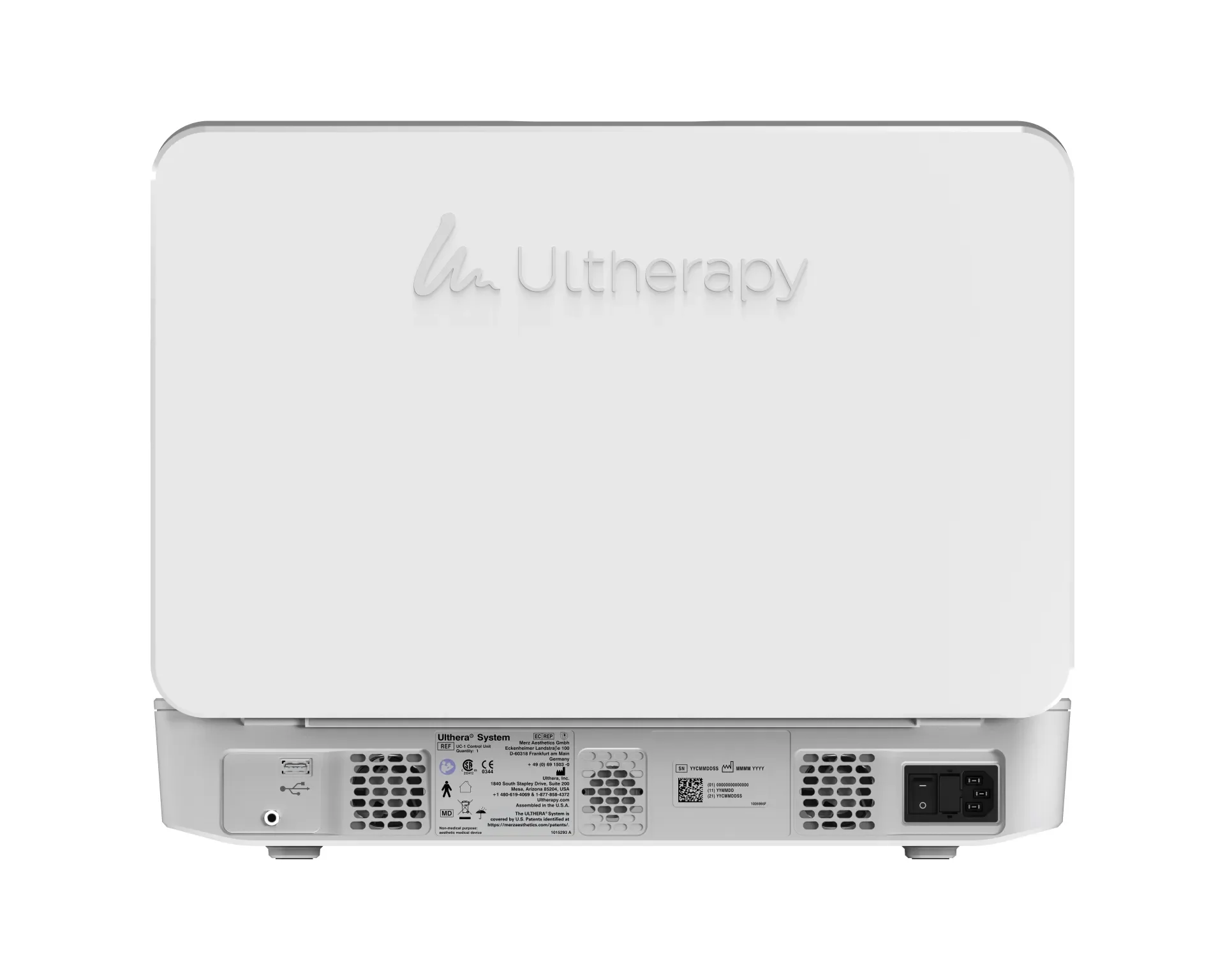
When my 表姊 came back from Cheongdam in 2014 with the face that started this whole archive, the platform she had used was the original Ultherapy — what Korean clinics now call 'first-generation Ulthera.' By the time I went myself in 2019, the platform had quietly upgraded to a generation that was meaningfully faster and better tolerated, and in the past two years it has upgraded again to what Merz Aesthetics now markets as Ultherapy PRIME. The PRIME generation has a faster handpiece, finer real-time imaging that lets the physician see depth as each shot is placed, the ability to treat the décolleté in addition to the face and neck, and — in my four-trip experience — meaningful improvement in tolerability at the 4.5 mm SMAS depth. The problem is that not every Seoul clinic that markets 'Ultherapy' is actually running PRIME. Some are still on first-generation Ulthera, some have transitioned partially, and some quote 'Ultherapy' as a category term without specifying generation. This page is the Taiwanese first-person audit of which Seoul districts run PRIME at meaningful penetration versus where original Ultherapy is still the default — and how to verify before you pay a deposit from TPE. Authority anchor throughout: the Merz Aesthetics provider locator is the only definitive source for platform authentication.
What changed when Merz launched PRIME — the clinical case for the upgrade
The Ultherapy PRIME generation, launched globally by Merz Aesthetics and rolled out in Korea over the 2023-to-2025 window, replaces the older DeepSEE generation that had been standard since 2014. The clinical changes are not marketing — they are real. PRIME has a modified handpiece pulse pattern that distributes thermal energy more evenly at the 4.5 mm SMAS depth, which is the depth where the structural lift is generated and also the depth where the older platform was most uncomfortable. PRIME's real-time imaging window is finer-grained, which allows the treating physician to verify she is hitting the SMAS layer rather than skimming above or driving below it — patient anatomy varies, and depth verification matters. PRIME adds the décolleté as a treatment area, which the older generation did not safely handle. And PRIME runs faster — a face-and-neck protocol that took 75 to 90 minutes on the older generation now runs 50 to 70 minutes on PRIME. The cumulative effect is a treatment that is meaningfully more tolerable at the same shot count, with broader anatomical coverage. Patient satisfaction in the post-PRIME window has measurably improved at the clinics where I have personally tracked aftercare conversations across multiple trips.
Original Ultherapy is not 'bad' — it is just older
Worth saying explicitly: the original Ultherapy platform is not unsafe, not unauthorised, and not clinically inferior at the level of mechanism. The thermal-coagulation principle is the same; the depths are the same; the lift develops over the same three-to-six-month window. Patients treated on first-generation Ulthera in 2014 through 2022 — including my 表姊 — got real results. The case for PRIME is not 'old platform bad, new platform good.' The case is faster, finer imaging, better tolerability, décolleté capability, and the additional fact that Merz Aesthetics' clinical investment is now flowing into the PRIME generation. If the only platform a Seoul clinic offers is original Ultherapy in 2026, that is a signal about the clinic's investment posture, not a safety concern.
Cheongdam — PRIME penetration is essentially complete
Cheongdam is the cluster where Ultherapy PRIME has reached effectively full penetration. The boutique premium practices along Dosan-daero and the side streets feeding into Cheongdam Station Exit 8 and 9 have transitioned to PRIME comprehensively — partly because the patient base in Cheongdam skews toward returning patients who specifically request the latest generation, partly because the practices' positioning toward Korean celebrity and senior international-patient traffic does not tolerate platform lag. In my four-trip personal experience, I have not encountered a Cheongdam practice in 2025 or 2026 that quoted me an original-Ultherapy treatment as the default — every consult I have sat through has assumed PRIME from the start. Pricing in Cheongdam reflects this: the KRW 2,500,000 to 4,500,000 face-and-neck band is essentially all PRIME pricing, with face-neck-décolleté protocols pushing the upper end of that range. The practical takeaway for a TPE patient: if you book a Cheongdam clinic verified on the Merz provider locator, you can assume PRIME by default. The verification still matters; the cluster is essentially full-PRIME, but the locator is the only authoritative check.
Apgujeong — PRIME default with some original-Ultherapy holdouts
Apgujeong has transitioned to PRIME at meaningful penetration but is one cluster behind Cheongdam in completeness. The Galleria-side and Apgujeong Rodeo practices that serve returning Korean and international patients run PRIME comprehensively; some of the broader-tier Apgujeong practices that serve mixed walk-in and tourist traffic still run original Ultherapy as a lower-priced campaign offering, with PRIME as a premium upsell. In practice, the way this manifests is that the consultation page may quote 'Ultherapy' generically with PRIME as a separately-priced option — a face-and-neck Ultherapy protocol at KRW 1,800,000 might be original-generation, while the KRW 2,800,000 alternative on the same page is PRIME. The patient I would caution here is the value-conscious patient who anchors on the lower price without checking which generation it represents. Apgujeong PRIME pricing typically sits in the KRW 2,000,000 to 3,500,000 band; original-Ultherapy pricing in the cluster runs roughly 30 to 40 percent below that. Verify on the Merz locator and ask the coordinator in writing which generation a quote represents — the better Apgujeong practices will state this clearly without prompting.
Gangnam Station axis — PRIME is the default but verify in writing
The broader Gangnam Station axis — Sinsa, Sinnonhyeon, Gangnam Station, the Line 2 and Line 9 corridor — runs PRIME as the de-facto default at the international-patient practices but with more variability than Cheongdam or Apgujeong. The larger international-patient clinics that staff Mandarin coordinators and run regular WhatsApp aftercare have transitioned to PRIME and price accordingly (KRW 1,800,000 to 3,500,000 face-and-neck band). The mid-tier and smaller practices in the cluster have a more mixed picture; some run PRIME, some still run original Ultherapy, some run both as separate menu items. The friction point for a first-time international patient is that Gangnam Station axis quotes are sometimes routed through coordinator chat without specifying generation, especially when the initial enquiry is in Mandarin and the response comes back in English or Korean. Ask explicitly, in writing, which generation the quoted protocol uses; expect the answer to clarify whether the device is PRIME or original Ultherapy. Cross-check the clinic name on the Merz provider locator. The cluster runs PRIME at probably 70 to 80 percent penetration in 2026; the verification practice still matters.
Myeongdong — the most variable cluster, where verification matters most
Myeongdong is where I would advise the most careful platform verification. The cluster's value posture and tourist-belt logistics mean that some Myeongdong practices have transitioned to PRIME while others still run original Ultherapy, and the lower price points across the cluster reflect both genuinely lower clinic positioning and, in some cases, older-generation platform. The reputable Myeongdong international-patient practices that have invested in PRIME are good — KRW 1,500,000 to 2,800,000 face-and-neck PRIME pricing in this cluster is genuinely competitive, and the multilingual coordinator infrastructure at the better practices is solid. The cluster's lower-quality end is where original Ultherapy is sometimes quoted as 'Ultherapy' without specifying generation, and where I have personally seen WhatsApp quotes that omit shot count and generation simultaneously. The patient I would steer through Myeongdong with extra caution is the first-time international patient who is anchoring on price and may not yet know to ask. Verification protocol: pull the clinic name from your shortlist into the Merz Aesthetics provider locator, ask the coordinator in writing 'Is this Ultherapy PRIME, the current Merz generation, or original Ultherapy / first-generation Ulthera?', and expect a clear answer in one or two sentences.
How to verify generation in writing — the four-question protocol
Across all four clusters, the verification protocol I use myself is four questions, asked in writing on WhatsApp or LINE before paying a deposit. First: 'Is your clinic listed on the Merz Aesthetics provider locator at ulthera.com? Please confirm the listing name.' Second: 'Is the Ultherapy treatment quoted in this protocol the current PRIME generation, or original Ultherapy / first-generation Ulthera?' Third: 'Please break down the shot count by zone — face, neck, jawline, submental — and confirm the total.' Fourth: 'Will the consulting physician personally perform the treatment, or is it performed by a nurse or technician?' Korean medical law requires physician-performed treatment, so the fourth question should always be answered yes — but asking it in writing creates a record. The four answers, taken together, distinguish a clinic that is operating at editorial-grade transparency from a clinic that is hedging on platform generation, shot count, or treatment delivery. I do not pay deposits to clinics that hedge on these four questions in writing.
Frequently asked questions
Is the original Ultherapy still safe in 2026?
Yes. The original Ultherapy platform is authorised by Merz Aesthetics and the underlying thermal-coagulation mechanism is the same as PRIME. The case for PRIME is faster handpiece, finer imaging, better tolerability at SMAS depth, and décolleté capability — not a safety concern with the older generation. Patients treated on original Ultherapy in 2014 through 2022 got real, durable results.
Can I tell from the clinic website whether they run PRIME or original Ultherapy?
Sometimes, but not reliably. Better Korean clinics specify 'Ultherapy PRIME' or 'Ulthera PRIME' explicitly on the consult page. Less rigorous practices use 'Ultherapy' as a category term without generation specificity. Ask in writing on WhatsApp or LINE before paying a deposit and cross-check the clinic on the Merz Aesthetics provider locator.
How much does PRIME cost more than original Ultherapy in the same Seoul cluster?
Roughly 20 to 40 percent more, depending on the cluster. In Apgujeong, where both generations co-exist on the same menu, PRIME pricing runs 30 to 40 percent above original-Ultherapy pricing for the equivalent shot count. In Cheongdam, where PRIME has reached full penetration, the original-Ultherapy comparison does not really apply. The PRIME premium reflects platform vintage rather than physician seniority alone.
If a Myeongdong clinic quotes Ultherapy at KRW 1,200,000, is that PRIME?
Probably not. Face-and-neck PRIME in Myeongdong typically starts around KRW 1,500,000; pricing meaningfully below that band is more likely to represent original-generation Ultherapy or a lower shot count than what the consultation appears to suggest. Verify generation in writing and verify the clinic on the Merz Aesthetics provider locator before treating the price as comparable.
Does the décolleté treatment require PRIME specifically?
Yes. The décolleté capability is a feature of the PRIME generation; the older Ultherapy / first-generation Ulthera platform did not safely handle décolleté coverage. If a clinic quotes a face-neck-décolleté protocol, it should be running PRIME by definition. Confirm in writing.
How do I check the Merz Aesthetics provider locator?
Visit ulthera.com and use the provider locator function with the clinic name and Seoul as the city. Authorised providers appear in the locator; unauthorised practices that market 'Ultherapy' without authorisation do not. The locator is the authoritative check on platform authenticity. I cross-check every clinic in our cluster guides against the locator before publishing.
If a clinic runs both generations, should I default to PRIME?
Generally yes, particularly if you are flying in from Taiwan and treating the trip as a meaningful investment. The PRIME premium of 20 to 40 percent buys you faster handpiece, finer imaging-led shot mapping, better tolerability at SMAS depth, and the option to add décolleté. For most international patients on a single-trip protocol, the PRIME generation is worth the premium. Patients on tight budgets running maintenance protocols may rationally choose original Ultherapy at the lower price.
Will PRIME be replaced by a newer generation soon?
Merz Aesthetics has not announced a successor platform as of 2026, and PRIME is positioned as the current flagship. Platform generations in this category typically run five to eight years before successor launches. Cheongdam and Apgujeong are likely to be the first clusters to adopt any future Merz successor; Myeongdong will lag, as it did with the PRIME transition.