Treatment Guide
Original Ultherapy vs Ultherapy PRIME — The Honest Generation Comparison
A Taiwanese first-person walkthrough of how the two Merz Aesthetics generations compare on speed, comfort, depth precision, and result trajectory — drawn from four Seoul trips on both platforms.
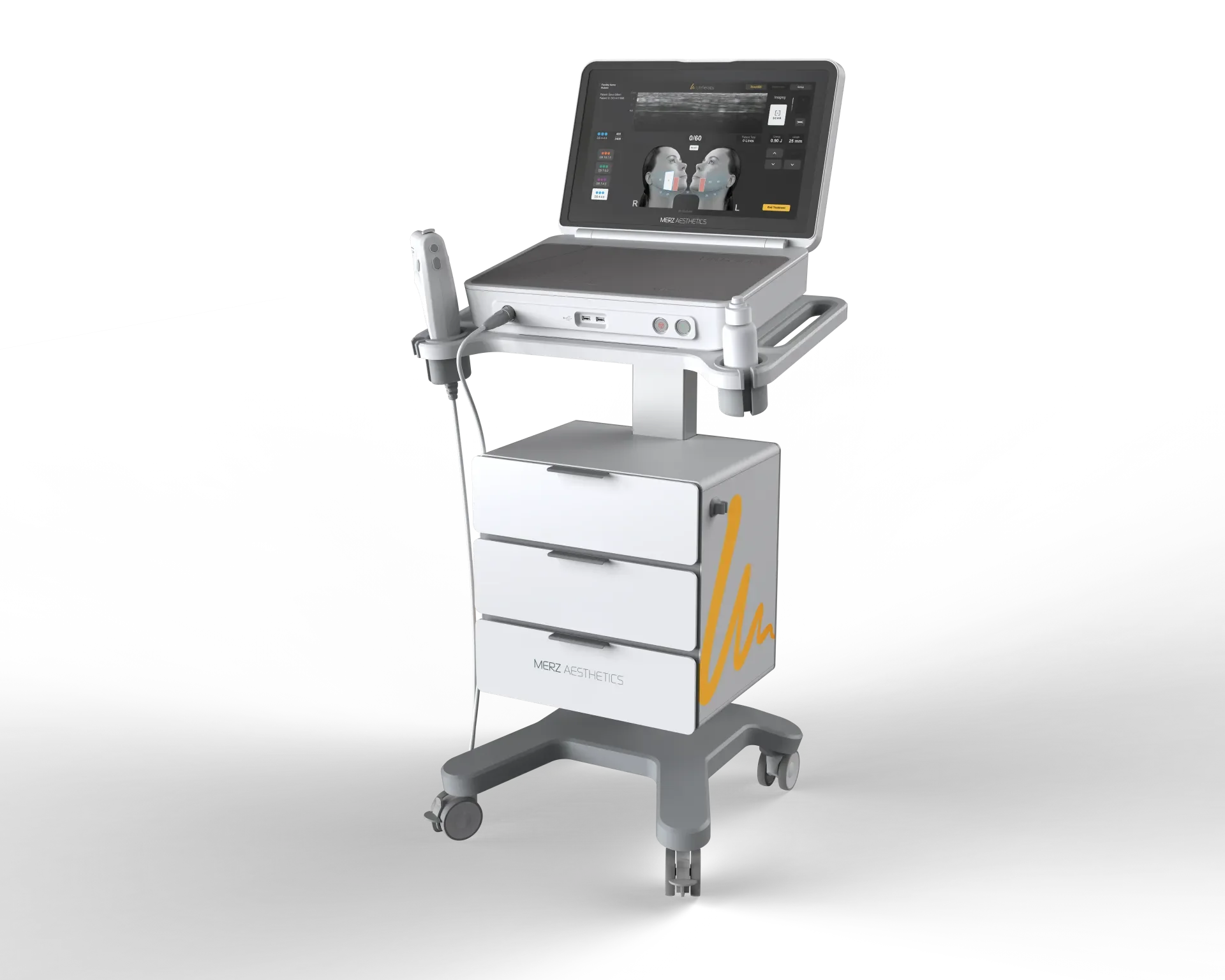
When my 表姊 came back from Cheongdam in 2014 with the face that started this whole archive, she had been treated on the original Ultherapy platform — the first-generation Merz Aesthetics device that had launched the SMAS-depth ultrasound category. By the time I went myself for my first treatment in 2019, the platform had quietly upgraded to a more refined generation; by my 2024 trip, the clinic I had been returning to had transitioned again to what Merz Aesthetics now markets as Ultherapy PRIME. I have therefore had the unusual privilege of comparing both generations on my own face across four Seoul trips, and I have logged the experience in enough detail to write the honest generation-by-generation comparison that the Korean clinic websites mostly hedge on. This page is that comparison: how the handpiece speed differs, how the tolerability at the 4.5 mm SMAS depth differs, how the real-time imaging precision differs, how the anatomical coverage differs, and how the lift trajectory differs at twelve and twenty-four weeks. Authority anchor throughout: the Merz Aesthetics clinical evidence library is the only definitive source for the platform parameter comparisons that this page draws on.
Handpiece speed — the difference patients notice first
The most immediate difference between the two generations is handpiece speed. The original Ultherapy platform delivered each shot in a measured pulse pattern that meant a face-and-neck treatment of roughly 600 to 800 shots took 75 to 90 minutes on the chair. Ultherapy PRIME has a faster pulse pattern at the same shot density, which means the same protocol runs 50 to 70 minutes. The 20 to 25 minute reduction matters more than it sounds. For the patient, it compresses cumulative discomfort into a shorter window; for the physician, it means more consistent shot placement because hand fatigue is less of a factor; for the clinic, it means more protocols can be scheduled per chair-day, which is part of why PRIME pricing in Seoul has not climbed proportionally to the platform improvement. Patients who have run both generations on the same face — myself included — describe the PRIME session as 'meaningfully easier to sit through,' even though the shot count and energy parameters are comparable. The speed difference is the first thing a returning patient notices when the generation has been upgraded.
Why the speed reduction matters beyond convenience
The speed reduction matters clinically, not just operationally. SMAS-depth ultrasound delivers thermal coagulation at 4.5 mm; the energy each shot deposits in the tissue is independent of how fast the handpiece moves between shots. But the patient's anxiety, breathing pattern, and small involuntary movements during the protocol affect how steady the physician's placement is. A 50 to 70 minute session is one in which the patient breathes more evenly, the physician's hand is fresher in the second half, and the shot placement on the contralateral side of the face matches the placement on the first side more reliably. The before-and-after photography I have logged on PRIME treatments shows slightly more symmetric lift trajectories at twelve weeks than the equivalent photography from the original-generation era — not a dramatic difference, but a measurable one. The handpiece speed is the clinical lever, not just the patient-comfort lever.
Tolerability at the 4.5 mm SMAS depth — where PRIME's biggest gain lives
The 4.5 mm SMAS depth is where the structural lift is generated and, on the original platform, where the discomfort was most concentrated. The bone is closest to the surface at the jawline and submental zones; the energy density required to coagulate the SMAS layer reliably is high; the original Ultherapy handpiece delivered each shot in a pulse pattern that, for many patients, registered as a 'deep thud' at these zones. Ultherapy PRIME has modified the handpiece pulse pattern to distribute the same total energy more evenly across the shot footprint, which lowers the peak intensity each shot delivers without lowering the average energy. The clinical effect is meaningfully better tolerability at SMAS depth — the same shot count, the same coagulation outcome, but a markedly easier sensory experience. In my own four-trip log, the original-platform face-and-neck protocol required two or three short breaks for breathing recovery; the PRIME equivalent has run end-to-end without breaks on both treatments I have logged on the new generation. Korean clinics that have transitioned to PRIME describe the tolerability shift as the single biggest patient-feedback change since the platform upgrade. For 40s patients running the moderate-laxity protocol at full coverage, the tolerability gain is the most consistent advantage PRIME delivers over the original generation.
Imaging precision — the upgrade that justifies the consultation premium
Both generations include real-time ultrasound imaging that lets the treating physician visualise the SMAS layer she is targeting; the difference is that PRIME's imaging window is meaningfully finer-grained. On the original platform, the imaging let the physician confirm broadly that she was at SMAS depth; on PRIME, the imaging lets her verify zone by zone that the depth is calibrated to the individual patient's anatomy. The clinical case for this is anatomically real — patient SMAS depths vary by roughly 0.5 to 0.8 mm across the population at the same nominal age, and at the jawline and submental zones where the energy density is highest, that variation can mean the difference between an optimally placed shot and a shot that skims above or drives below the target layer. Reputable Cheongdam and Apgujeong practices running PRIME use the imaging window during the consultation phase, not just during the treatment phase — the physician will sometimes annotate a printed face diagram with the depth she has measured at three or four zones, which the original platform did not really support. The patient experience is that the consultation feels more clinically grounded; the long-term result is that the shot placement is more reliably on-target. Patients running PRIME protocols at editorial-grade clinics see this in the twelve-week and twenty-four-week photography as more symmetric lift trajectories and fewer zones where the result feels under-developed.
How to verify the physician is using PRIME imaging properly
Ask, during the consultation, whether the physician will use the imaging window to measure your SMAS depth at the three primary zones (midface, jawline, submental) before the protocol begins. The better Cheongdam and Apgujeong practices will answer yes without hesitation and will sometimes show the imaging readout on the consultation tablet; less rigorous practices will hedge or pivot to brochure language about the platform's general capabilities. The verification question separates the clinic that uses PRIME's imaging upgrade clinically from the clinic that owns the device but does not deploy its imaging advantage during protocol calibration. Patients paying the PRIME premium of 20 to 40 percent over original Ultherapy are partly paying for this clinical deployment; verifying it before the deposit is the editorial bar.
Anatomical coverage — décolleté and the broader treatment field
The most visible anatomical difference between the two generations is the décolleté capability. The original Ultherapy platform was indicated for face and neck only; the décolleté zone, where the SMAS-equivalent layer is shallower and the tissue more vascular, did not safely tolerate the original handpiece's pulse pattern. PRIME's modified pulse pattern and finer imaging window have brought the décolleté into the treatment field, a meaningful expansion for 40s and 50s patients who have started to see laxity progression below the clavicle. The face-neck-décolleté protocol adds roughly 200 to 300 shots and 15 to 20 minutes of chair time; pricing runs 25 to 40 percent above the face-and-neck standalone. The clinical case is strongest for patients who have already accumulated visible photoaging across the upper chest. The original-generation patient who wants décolleté coverage has to wait for a separate device protocol; PRIME makes the addition possible in the same session.
Lift trajectory — how the result develops at twelve and twenty-four weeks
The lift trajectory on both generations follows the same biological clock — thermal coagulation creates new collagen, the new collagen organises over three to six months, and the visible structural change develops gradually rather than appearing immediately. Where the two generations differ is in trajectory consistency. Original-platform patients in my four-trip log show photographable change at six to eight weeks and full result at twelve to twenty-four weeks, with some zone-by-zone variability in how quickly the lift manifests. PRIME patients in the same log show comparable timing on the macro trajectory but more even zone-by-zone development — the jawline lift and the midface lift tend to manifest in the same window rather than the jawline lagging slightly behind, which is consistent with the imaging-precision argument made earlier in this page. The peak lift on both generations is comparable when the protocols are equivalently delivered; the maintenance interval (18 to 24 months for moderate-laxity 40s patients) is the same. The result is not a dramatic transformation on either generation; it is a structural change that family members notice without being able to name. PRIME's advantage on the result side is consistency and symmetry, not magnitude.
Patient profile where PRIME's result advantage matters most
The patient profile where PRIME's result advantage matters most is the first-time Ultherapy patient flying in from Taipei or Hong Kong for a single trip and depending on the one protocol to deliver the lift she has read about. For her, the symmetry advantage and the zone-by-zone consistency PRIME's imaging precision delivers are the difference between a result that meets her expectations across the full face and a result that feels under-developed in one or two zones. The patient profile where the advantage matters less is the returning maintenance patient who has had a satisfying course on the original generation, is running a refresh in the 18 to 24 month interval, and is anchoring on cost discipline rather than maximum protocol delivery. For her, the original-platform option at the lower price may rationally be the right choice in clusters where it is still available.
Pricing differential — what the PRIME premium actually buys
Across Seoul's four clusters, PRIME pricing runs 20 to 40 percent above original-Ultherapy pricing for equivalent shot counts at the practices where both generations co-exist on the same menu. In absolute terms, the premium ranges from KRW 400,000 to KRW 1,200,000 on a typical face-and-neck protocol. The premium is real cost, not marketing — it reflects the platform investment Merz Aesthetics has poured into PRIME and the consultation discipline upgrades that PRIME enables. For the Taiwanese 40s patient flying in for a single trip, the premium is worth it in almost every scenario: faster handpiece, better SMAS-depth tolerability, finer imaging precision, décolleté option if desired, and more symmetric result trajectory together add up to a meaningfully better protocol delivery. For the returning maintenance patient on tight cost discipline, the original-platform option is rationally available; for the first-time patient who has flown five hours to be there, the PRIME premium is the right call.
Frequently asked questions
How much faster is Ultherapy PRIME than the original platform?
The face-and-neck protocol that took 75 to 90 minutes on the original platform runs 50 to 70 minutes on PRIME at equivalent shot counts. The 20 to 25 minute reduction is the first thing returning patients notice; it also has clinical implications for shot-placement consistency across a long protocol.
Is PRIME meaningfully less uncomfortable than the original generation?
Yes, particularly at the 4.5 mm SMAS depth where the energy density is highest and the original platform was most uncomfortable. PRIME's modified pulse pattern distributes the same total energy more evenly across the shot footprint, which lowers peak intensity without lowering average energy. In my four-trip log, PRIME protocols have run end-to-end without breath-recovery breaks; the original generation typically required two or three.
Can a clinic do décolleté treatment on the original Ultherapy platform?
No. The décolleté capability is specific to PRIME — the original platform's pulse pattern did not safely handle the shallower SMAS-equivalent layer and more vascular tissue in the décolleté zone. If a clinic quotes a face-neck-décolleté protocol, it should be running PRIME by definition. Verify in writing.
Is the imaging on PRIME actually different, or is it marketing?
Genuinely different. The imaging window is finer-grained, which lets the treating physician verify SMAS depth zone by zone before each shot rather than confirming depth broadly. Better Cheongdam and Apgujeong practices use the imaging during consultation, not just during treatment, to calibrate the protocol to individual anatomy. Patient SMAS depths vary by 0.5 to 0.8 mm across the population at the same nominal age — the imaging precision matters.
Will the result look different on PRIME versus the original platform?
The peak lift is comparable when protocols are equivalently delivered; the trajectory consistency differs. PRIME results in my four-trip log show more even zone-by-zone development — jawline and midface lift manifesting in the same window rather than the jawline lagging slightly — which is consistent with the imaging-precision advantage. The maintenance interval (18 to 24 months for moderate-laxity 40s patients) is the same on both generations.
How much more does Ultherapy PRIME cost in Seoul?
Roughly 20 to 40 percent above original-Ultherapy pricing for equivalent shot counts at practices where both generations co-exist. In absolute terms, KRW 400,000 to KRW 1,200,000 premium on a typical face-and-neck protocol. The premium varies by cluster — Apgujeong shows the cleanest side-by-side pricing because both generations co-exist on the same menu at several practices.
Should I always choose PRIME if it is available?
For the first-time international patient flying in from Taipei or Hong Kong for a single trip, almost always yes. For the returning maintenance patient with a satisfying original-platform history and a tighter trip budget, the original-platform option is rationally available in clusters where it still co-exists. The premium is real cost, not marketing — weigh it against what the trip means to you.
How do I verify which generation a Seoul clinic is running?
Four questions in writing on WhatsApp or LINE before the deposit. Confirm Merz Aesthetics provider locator listing by clinic name. Confirm the quoted protocol uses PRIME, not original Ultherapy or first-generation Ulthera. Request shot count broken down by zone. Confirm physician-performed delivery per Korean medical law. Clinics that answer all four cleanly pass the editorial bar.