Treatment Guide
How the PRIME Generation Rumors Travelled Through Seoul Before Merz Confirmed
A Taiwanese first-person record of the pre-launch information cycle, the coordinator-chat fragments, the Taipei forum threads, and what an international patient should learn from how that information actually moved.
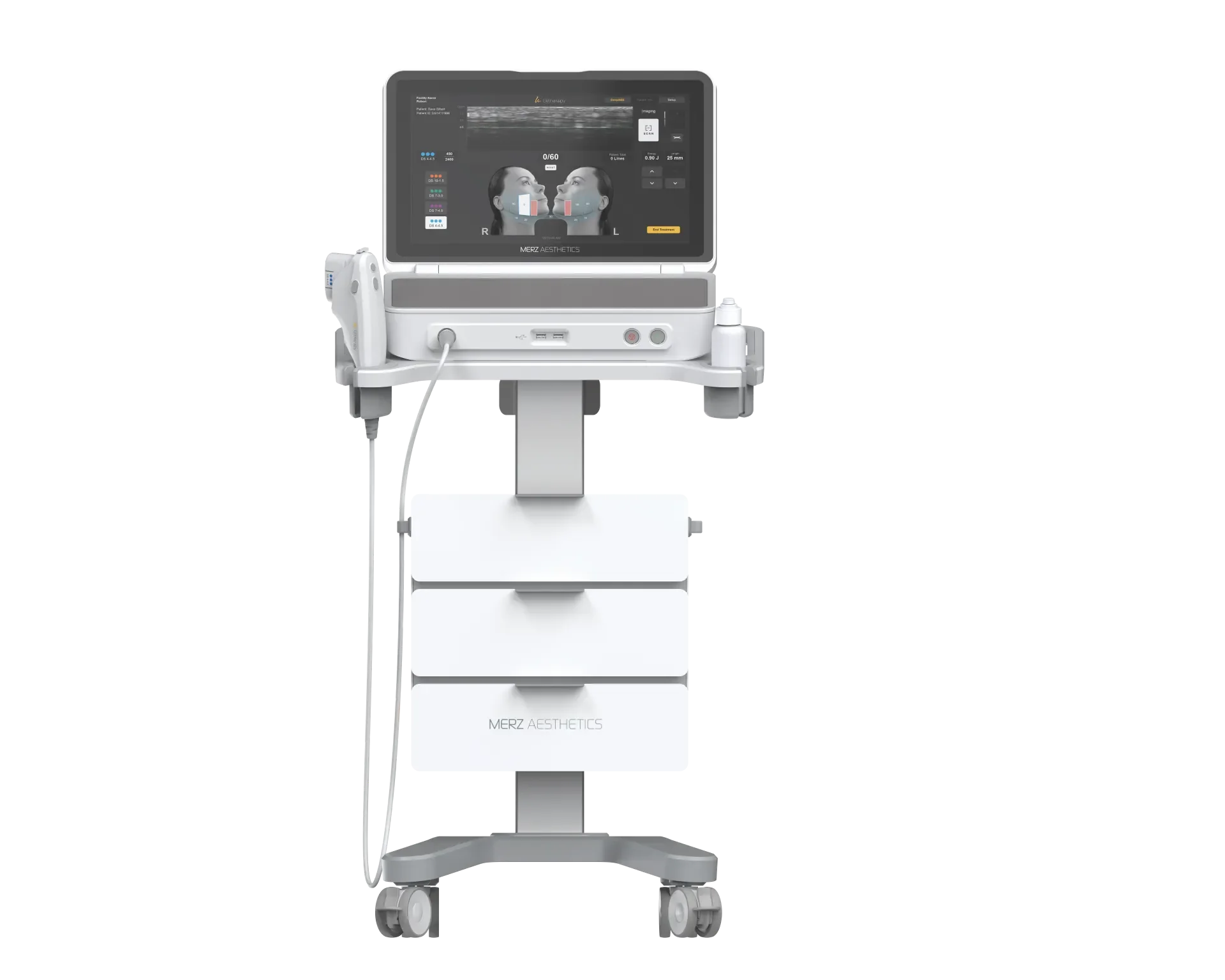
Long before Merz Aesthetics formally announced the Ultherapy PRIME generation in Korea, the upgrade was already a working assumption inside the Seoul clinic clusters that handle returning international patients. I started hearing about it in coordinator WhatsApp threads in the second half of 2022, when a Cheongdam practice I had used in 2019 mentioned in passing that a faster handpiece was being trialled in a small number of senior-physician hands. By early 2023 the rumour had hardened into specifics — a finer real-time imaging window, a SMAS-depth tolerance improvement, and a décolleté capability the older platform did not safely cover. The formal Merz Aesthetics rollout caught up to what was already being treated as the working truth in the clusters that mattered. This page is the Taiwanese first-person record of how that pre-launch information cycle actually moved through Seoul — what was said, what turned out to be correct, and what an international patient should learn from the way platform-generation rumours travel. Authority anchor throughout: the Merz Aesthetics provider locator remains the only definitive source for platform authentication.
The first signal — late 2022 coordinator chats in Cheongdam
The earliest concrete signal I personally received was a WhatsApp message from a Cheongdam coordinator in October 2022, mentioning that one of the senior physicians at the practice had been participating in what was described as 'investigator-led handpiece evaluation' with Merz Aesthetics. The wording was careful — it did not say 'PRIME', it did not promise a product launch timeline, and it explicitly framed the evaluation as physician-side rather than patient-side. But the substantive content was unambiguous: a generation upgrade was in active development, with senior Cheongdam practices serving as one node of the clinical-feedback infrastructure. Returning Korean patients at that practice were not being offered the evaluation platform; the trials were running in physician hands with controlled patient selection. What this taught me, and what I would emphasise for any patient reading platform rumours in 2026 and forward, is that the earliest reliable signals do not come from marketing pages or social posts. They come from the working clinical relationships between senior Cheongdam physicians and the device manufacturers, and they are framed in physician language rather than marketing language.
What the rumour got right and what it did not pin down
The substantive technical content — faster handpiece, finer imaging, SMAS-depth tolerance — was correct from the earliest specific mentions. What the rumour did not pin down was the launch timeline, the commercial pricing, the décolleté capability (which surfaced later), and the specific marketing name PRIME. Patients who anchored on the rumour as a reason to delay their 2023 booking ended up waiting longer than the technical content would have justified. The lesson: substantive clinical content of a pre-launch rumour can be reliable; commercial timing rarely is.
The Taipei forum cycle — early to mid 2023
By February 2023 the rumour had crossed into Taipei patient-side forums. A long-running medical-tourism thread carried a post from a returning patient who reported that her Apgujeong consultation had referenced 'a newer Ultherapy machine' that her physician preferred over the standard platform. The post was specific about handpiece speed and tolerability and vague about everything else. Within two weeks the thread had accumulated thirty-plus replies, several from coordinator-adjacent posters whose anonymity made cross-verification impossible. The Taipei forum cycle illustrated a recurring information-quality problem: substantive clinical detail from a real patient experience gets co-mingled with promotional content from anonymous coordinator-adjacent accounts, and the resulting thread is harder to use as a decision input than the original first-person post was. I cross-checked the rumour through my original Cheongdam coordinator and confirmed that the Apgujeong patient's report was consistent. But the verification took back-channel access; a first-time international patient reading the same thread in 2023 would not have had that path.
Why coordinator-adjacent posts in patient forums distort the signal
The Taiwan and Hong Kong patient-side forum ecosystems are valuable but vulnerable to a specific failure mode: coordinator-adjacent accounts post under personal-patient framing while operating effectively as marketing channels. The result is that a thread mixing genuine returning-patient reports with coordinator-adjacent promotional content reads to a new reader as if all the posts carry the same epistemic weight, when in fact they do not. The discipline I apply: weigh the substantive technical content of a forum post (specific platform names, shot counts, anatomical zones, tolerability reports) more heavily than reputational content (clinic praise, physician name-checks, vague endorsements). Substantive technical content is harder for a coordinator-adjacent account to fabricate; reputational content is trivially easy to fabricate.
Mid-2023 — the marketing-name leak and the décolleté capability
Around June 2023 the marketing name PRIME began appearing on Korean clinic consultation pages that had previously described the upgraded platform only as 'next-generation Ultherapy.' The name leak preceded the formal Merz Aesthetics commercial launch announcement by approximately four to five months. In the same window, the décolleté capability — not part of the earlier rumour content — surfaced concretely, with several Apgujeong and Cheongdam practices beginning to quote face-neck-décolleté protocols at a defined premium. The combination of the marketing-name leak and the décolleté capability surfacing simultaneously was, in retrospect, the strongest signal that the commercial launch was imminent. Patients who booked in this window were among the earliest to receive PRIME-generation treatment in Seoul, and aftercare reports from that cohort confirmed the substantive technical claims were real rather than promotional.
How to read a marketing-name leak as a launch signal
A marketing name appearing on multiple unaffiliated clinic consultation pages within a four-to-six-week window, especially when accompanied by concrete protocol differences (here, décolleté capability and a defined pricing premium), is one of the more reliable launch-imminence signals in the Korean aesthetic-device market. The reason is structural: clinic consultation pages are updated by clinic marketing staff working under physician sign-off, and a coordinated name change across multiple unaffiliated practices typically reflects manufacturer-provided collateral that has been released in advance of a public launch. The signal is not foolproof — a leaked name does not always survive to the final launch — but combined with substantive protocol changes it is meaningful.
Late 2023 to early 2024 — the formal Merz Aesthetics rollout
The formal Merz Aesthetics commercial rollout of Ultherapy PRIME in Korea took shape across late 2023 and early 2024, with the bulk of the Cheongdam and Apgujeong transitions completed in that window. By the time the formal rollout was visible to the broader market — clinic websites uniformly using the PRIME name, the Merz Aesthetics provider locator updated, pricing tiers stabilised — the pre-launch rumour cycle had been running for approximately fourteen months. Patients who had been tracking the rumour cycle through reliable signals were able to book PRIME treatment several months ahead of the broader international-patient market. This is not a recommendation to book on rumour. It is an observation about how the information actually moved: the substantive clinical content was reliable, the commercial timing was approximately right plus a delay, and patients who benefited most treated the rumour as one input alongside Merz Aesthetics provider-locator verification and direct physician consultation.
What this teaches about future generation rumours
Merz Aesthetics has not announced a successor to PRIME as of 2026, and platform generations in this category typically run five to eight years before successor launches. When the next rumour cycle begins — likely some time in the 2027 to 2030 window — the pattern described on this page is likely to repeat. The earliest reliable signals will come from senior Cheongdam physicians participating in investigator-led evaluations, framed in physician language rather than marketing language. Patient-side forum content will lag the coordinator-chat content by three to six months. Marketing-name leaks across multiple unaffiliated clinic consultation pages will signal launch imminence by four to five months. The discipline for an international patient reading any pre-launch rumour: weigh substantive clinical content more heavily than commercial timing claims, verify through the manufacturer's authoritative channel, and do not delay a clinically warranted treatment on the basis of a rumour that has not yet been confirmed.
Patient-side discipline — how to read platform-generation rumours without being manipulated
The most important lesson from the PRIME pre-launch cycle is not about PRIME specifically. It is about how to read platform-generation rumours generally, in a market where coordinator-adjacent content, patient-side forum content, and manufacturer-side communications all circulate simultaneously with different epistemic weights. The discipline I use: first, treat substantive clinical content (specific handpiece changes, anatomical capabilities, tolerability reports) as more reliable than reputational or commercial content. Second, treat physician-language framing as more reliable than marketing-language framing. Third, treat coordinator-chat content from clinics where you have prior treatment history as more reliable than anonymous forum content. Fourth, cross-verify through the Merz Aesthetics provider locator. Fifth, do not let an unverified rumour delay a clinically warranted treatment.
The KHIDI medical-tourism framework as a stabilising reference
Korea Health Industry Development Institute (KHIDI) maintains the registration and oversight infrastructure for medical-tourism facilitators and provides the stable institutional reference against which rumour-cycle volatility can be measured. KHIDI-registered facilitators operate under continuous disclosure obligations, and rumour content that would not survive KHIDI disclosure standards is rumour content that should not influence a patient's deposit decision. The KHIDI framework does not directly verify platform generations — that is Merz Aesthetics' role — but the broader institutional framework does set the baseline against which any platform-rumour-driven booking decision should be tested.
Frequently asked questions
When did the Ultherapy PRIME pre-launch rumours first start circulating in Seoul?
The earliest concrete signals I personally received were Cheongdam coordinator WhatsApp messages in October 2022, referencing investigator-led handpiece evaluation in senior physician hands. The rumour cycle ran for approximately fourteen months before the formal Merz Aesthetics commercial rollout in Korea across late 2023 and early 2024.
Was the pre-launch rumour content accurate compared to what PRIME actually delivered?
The substantive clinical content was largely accurate — faster handpiece, finer real-time imaging, improved SMAS-depth tolerability. The décolleté capability surfaced later in the rumour cycle and was also accurate. The commercial timing claims in the early rumour were optimistic; the actual rollout took longer than the earliest chatter suggested. Verify on the Merz Aesthetics provider locator before treating any current platform rumour as decision-relevant.
Did Taipei patient forums get the rumour right?
The substantive technical content in first-person returning-patient posts was reliable. The problem was that coordinator-adjacent accounts mixed promotional content into the same threads, making it harder for new readers to weigh the signal. The discipline: prioritise specific technical detail over reputational praise when reading any patient-forum thread.
How can I distinguish a reliable platform-generation signal from marketing chatter in 2026?
Reliable signals tend to use physician-language framing (investigator-led evaluation, clinical-feedback infrastructure) rather than marketing-language framing (launch event, exclusive access). They come from clinics where you have prior treatment history rather than from anonymous forum accounts. And they describe substantive technical changes rather than reputational or commercial claims. Cross-verify through the Merz Aesthetics provider locator at ulthera.com.
Should I delay a current treatment if there is a rumour of a successor platform?
Generally no. Merz Aesthetics has not announced a successor to PRIME as of 2026, and platform generations in this category typically run five to eight years. The PRIME platform you can be treated on today is real and clinically validated. A rumour about a successor that has not been formally announced should not influence a clinically warranted booking decision.
What role does the KHIDI medical-tourism framework play in stabilising patient decisions during rumour cycles?
KHIDI maintains the registration and oversight infrastructure for medical-tourism facilitators, providing a stable institutional baseline against which rumour-cycle volatility can be tested. KHIDI does not directly verify device generations — that is Merz Aesthetics' role — but the framework sets the standard against which deposit decisions should be evaluated. Our facilitator registration is KHIDI A-2026-04-02-06873.
How did the marketing name PRIME first surface publicly?
Around June 2023 the PRIME name began appearing on Korean clinic consultation pages that had previously described the upgraded platform only as next-generation Ultherapy. The name leak preceded the formal Merz Aesthetics commercial launch announcement by approximately four to five months, and the simultaneous surfacing of the décolleté capability across multiple unaffiliated practices made the launch-imminence signal more reliable.
Where can I get authoritative information about Ultherapy platform generations today?
The Merz Aesthetics provider locator at ulthera.com is the authoritative source for current platform authentication and authorised provider listings. The Korean Ministry of Food and Drug Safety (MFDS) maintains the device-approval infrastructure that underlies platform authorisation in Korea. The Korean Society of Dermatology (KSD) is the relevant specialty body for dermatology-side clinical context.